


 English
Bonding Jumper Core Definitions and Electrical Functions
In modern lightning protection, grounding, and electrical systems, the Bonding Jumper is a critical link ensuring the safety of the entire facility. It is far more than a simple conductor; it is the core component for building a low-impedance path for current.
Definition of a Bonding Jumper
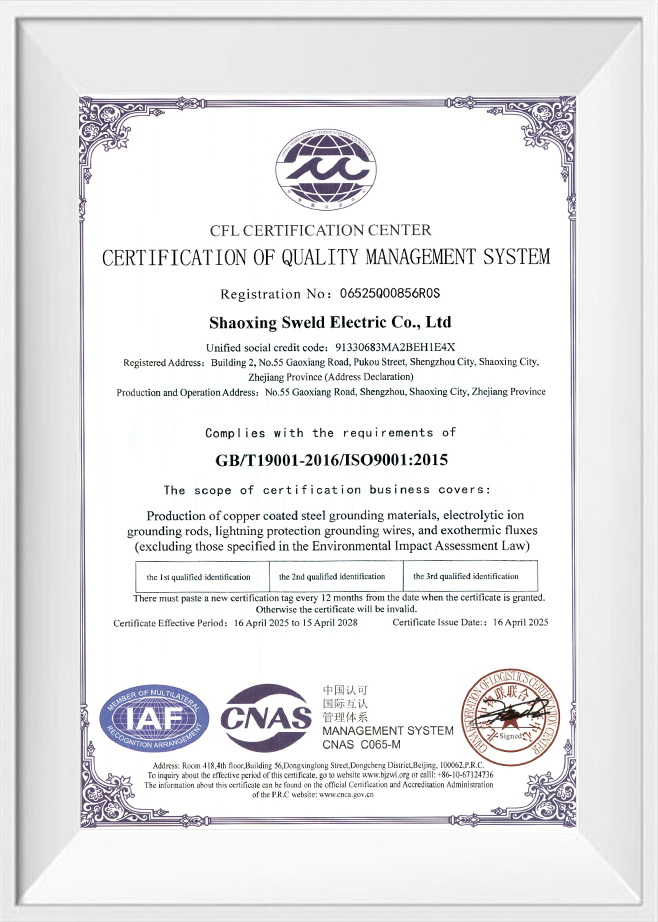
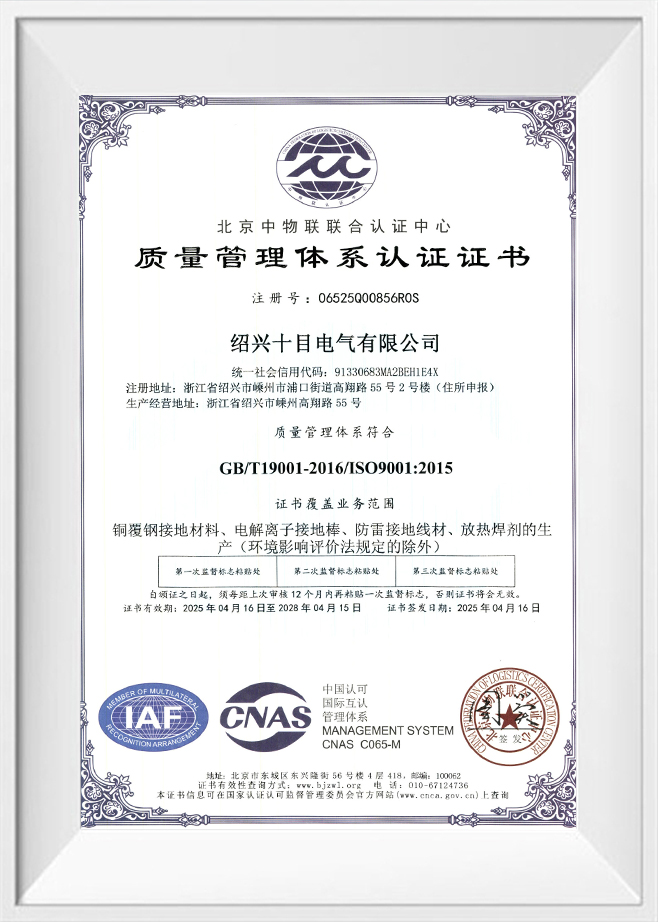
A Bonding Jumper refers to a reliable conductor used to connect two or more metal parts of an electrical system to ensure electrical continuity between them. Shaoxing Sweld Electric Co., Ltd., with its ISO9001-certified production system, utilizes high-precision CNC machining centers to manufacture connection hardware, ensuring every Bonding Jumper maintains long-term stable conductivity in complex industrial environments.
Essential Distinction Between Bonding and Grounding
To understand the role of a Bonding Jumper, one must first distinguish between Bonding and Grounding:
Bonding: The act of using a Bonding Jumper to connect all non-current-carrying metal parts together to eliminate potential differences and prevent spark discharges.
Grounding: The act of connecting the entire system to the earth.
Shaoxing Sweld Electric Co., Ltd. provides systematic solutions designed to integrate these two concepts organically, building a rigorous protection network through high-quality Stranded Wire and Ground rods.
Construction of Fault Current Paths
When electrical equipment suffers insulation failure, causing the casing to become energized, the Bonding Jumper provides a low-impedance effective return loop. This path allows fault current to return rapidly to the power source neutral point, triggering circuit breakers or fuses to trip immediately and cut off the power.
Low Impedance Connection: The higher the impedance, the lower the fault current, which may prevent protection devices from triggering.
Welding Stability: With an annual production capacity of 500 tons of exothermic welding powder, Shaoxing Sweld Electric Co., Ltd. provides molecular-level connections for Bonding Jumper joints. Compared to mechanical crimping, this significantly reduces contact resistance and resists corrosion.
Technical Parameter Comparison: Bonding Jumper Connection Methods
| Performance Indicator | Mechanical Lug Connection | Sweld Exothermic Welding |
| Contact Resistance | Higher; increases with oxidation over time | Extremely low; equivalent to the conductor itself |
| Ampacity | Limited by contact surface area | Extremely high; melting point matches conductor |
| Corrosion Resistance | Prone to electrochemical corrosion at joints | Excellent; fully sealed metallic fusion |
| Maintenance Cost | Requires regular tightening and inspection | Maintenance-free for life |
| Installation Ease | Simple tools required; prone to loosening | Requires specific molds; permanent connection |
| Application Range | Temporary or dry indoor environments | Grounding grids, high-current loops, harsh outdoor environments |
Why Choose Products from Shaoxing Sweld Electric Co., Ltd.?
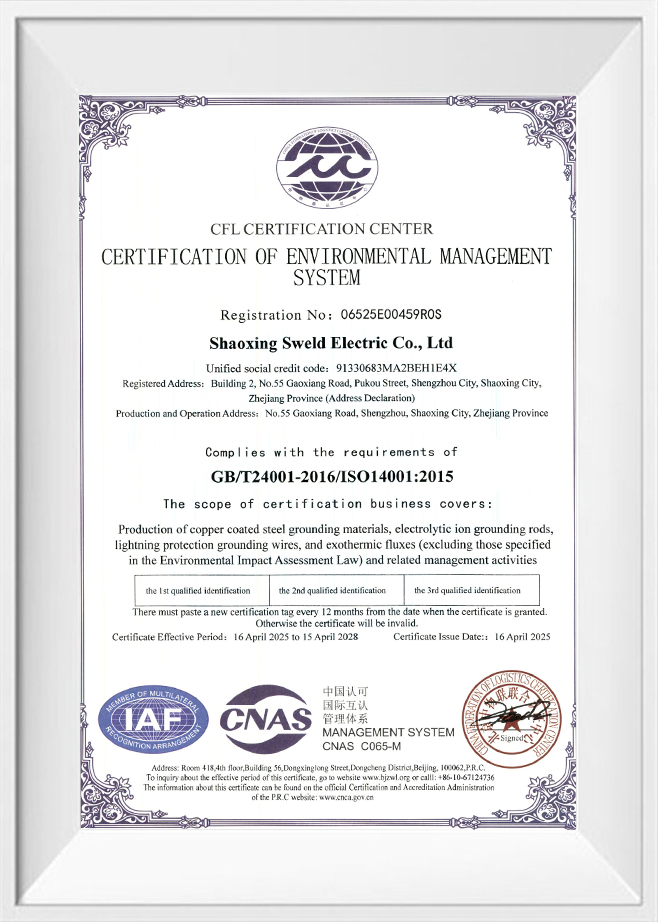
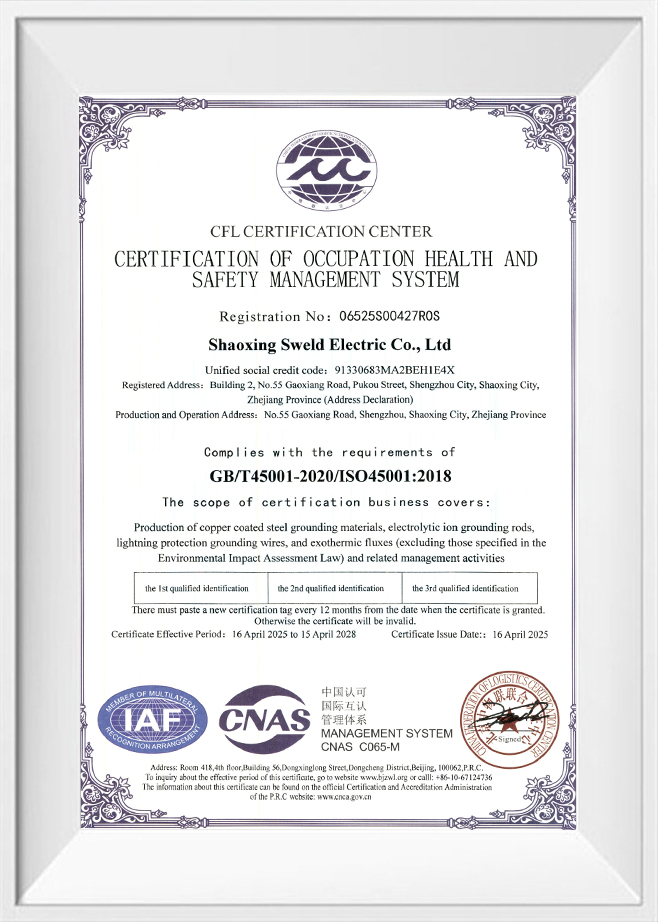
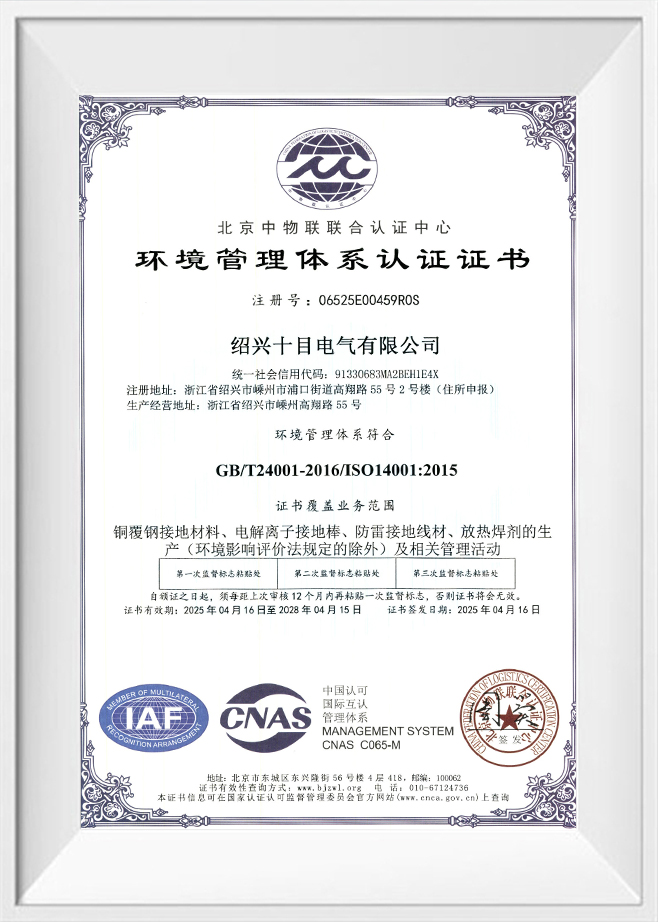
Located in Shengzhou, Shaoxing, China, and covering an area of 3000 square meters, Shaoxing Sweld Electric Co., Ltd. provides the Stranded Wire and hardware connection parts required for Bonding Jumper applications. We are certified under ISO14001 and ISO45001, ensuring an environmentally safe production process. Our professional technical team assists customers in Bonding Jumper selection calculations to ensure the cross-sectional area meets fault current requirements.
Primary Classifications of Bonding Jumpers
In complex electrical installation engineering, Bonding Jumpers are strictly divided into three core categories based on installation location and function. Shaoxing Sweld Electric Co., Ltd. provides connection components that meet international standards for each classification.
Main Bonding Jumper
The Main Bonding Jumper is the critical link connecting the grounded conductor and the equipment grounding conductor at the service entrance equipment of a building.
Function: It establishes the physical connection between the power neutral and the grounding system, serving as the essential path for fault current to return to the source.
Product Selection: The high-conductivity copper bars and heavy-duty connection hardware manufactured by Shaoxing Sweld Electric Co., Ltd. ensure structural integrity under high short-circuit current impacts.
Equipment Bonding Jumper
This type of Bonding Jumper is used to connect non-current-carrying metal enclosures, raceways, and other metal parts of electrical equipment.
Classifications: Load Side connects to equipment downstream of the distribution panel; Supply Side is located before the service disconnect switch.
Manufacturing Standards: Utilizing 7 high-speed CNC machining centers, we customize precisely matched connection plates to ensure a perfect fit for Equipment Bonding Jumpers on various metal frames.
System Bonding Jumper
Specifically used for Separately Derived Systems, such as the secondary side of dry-type transformers.
Key Point: It is usually installed inside the transformer terminal box, connecting the transformer neutral (X0) to the grounding bus.
Connection Solution: We recommend the exothermic welding technology from Shaoxing Sweld Electric Co., Ltd., as vibration during transformer operation can loosen mechanical bolts, whereas molecular-level welding provides a permanent guarantee.
Technical Parameter Comparison: Application Standards for Different Bonding Jumpers
| Feature | Main Bonding Jumper | Equipment Bonding Jumper | System Bonding Jumper |
| Installation Location | Service entrance / Switchgear | Enclosures, trays, conduits | Transformer / Generator output |
| Size Requirement | Based on main input conductor size | Based on OCPD capacity | Based on secondary conductor size |
| Mechanical Strength | Extremely high for fault currents | High for daily maintenance/vibration | Extremely high for vibration/heat |
| Recommended Fittings | Sweld Heavy-duty busbars | Sweld Various electrical hardware | Sweld Welding molds and powder |
| Compliance | ISO9001 / National Lab Testing | ISO9001 / ISO14001 | Dangerous package export cert |
Analysis of Core Application Scenarios
The correct application of a Bonding Jumper is key to ensuring electrical continuity. Shaoxing Sweld Electric Co., Ltd. leverages its 500-ton annual capacity for exothermic welding powder to provide high-reliability connections for complex scenarios.
Cable Trays and Conduit Systems
In long-distance wiring, metal cable trays and conduits often experience increased resistance due to expansion joints, bends, or non-continuous connections.
Necessity of Jumping: A Bonding Jumper must be installed at every non-continuous joint to maintain a low-impedance grounding path.
Sweld Solution: The flexible Braided Copper Wire produced by Shaoxing Sweld Electric Co., Ltd. is specifically suited for tray interfaces subject to vibration or thermal expansion, ensuring contact resistance is minimized.
Metal Piping Systems
According to electrical codes, metal water pipes and gas pipes within a building must undergo equipotential bonding.
Safety Role: Prevents pipes from becoming energized due to insulation failure in adjacent circuits.
Installation Location: Usually, a Bonding Jumper is installed at both ends of water meters or valves to bridge potentially insulating gaskets.
Durability: Given underground and humid environments, using grounding products from Shaoxing Sweld Electric Co., Ltd. effectively resists environmental corrosion.
Transformers and Generator Sets
Transformers are the core of separately derived systems, and the reliability of their Bonding Jumper directly affects the safety of the secondary side.
Neutral Bonding: Connecting the transformer neutral point to the grounding bus via a Bonding Jumper.
Technical Advantage: For transformers operating with high currents, the exothermic welding process from Shaoxing Sweld Electric Co., Ltd. is preferred, as its molecular bond withstands extreme thermal stress.
Material and Selection Standards for Bonding Jumpers
Material conductivity and precise cross-sectional area calculations are the core indicators of system safety. Shaoxing Sweld Electric Co., Ltd. ensures that every conductor and connector manufactured meets rigorous fault current tests.
Core Material Selection
Common materials for a Bonding Jumper include copper, aluminum, and copper-clad aluminum (CCA).
Copper: Offers the best conductivity and corrosion resistance. It is the preferred material recommended by Shaoxing Sweld Electric Co., Ltd. for underground and high-humidity environments.
Aluminum: Lightweight and lower cost, but requires specific installation techniques and cannot directly contact the earth.
Calculation Basis for Cross-Sectional Area
The size of a Bonding Jumper is determined based on the size of the largest phase conductor or the rating of the Overcurrent Protective Device (OCPD).
Safety Consideration: If the Bonding Jumper is undersized, intense temperature rise during a short circuit may melt the wire, interrupting the fault current path.
Professional Support: The technical team at Shaoxing Sweld Electric Co., Ltd. can match the most suitable Stranded Wire specifications based on customer system parameters.
Technical Comparison: Material Performance in Bonding Jumpers
| Parameter | Electrolytic Copper | Aluminum | Copper-Clad Aluminum |
| Conductivity (IACS) | 100% | 61% | 65% |
| Tensile Strength | Extremely High | Medium | High |
| Corrosion Resistance | Excellent | Prone to oxidation | Good |
| Service Life | 30+ Years | 15-20 Years | 15-20 Years |
Installation Specifications and Best Practices
The installation quality of a Bonding Jumper directly affects the lifeline of the electrical system. Shaoxing Sweld Electric Co., Ltd. provides both high-performance hardware and standardized installation procedures.
Surface Treatment and Contact Resistance
Before installing a Bonding Jumper, cleaning the metal contact surface is vital. Paint, rust, or oxide films must be removed to ensure direct metal-to-metal contact. When using connectors from Shaoxing Sweld Electric Co., Ltd., we recommend our specialized fasteners to maintain sufficient contact pressure over time.
Mechanical Protection and Wiring Principles
A Bonding Jumper should be installed where it is not subject to mechanical damage. It should be kept as short as possible to reduce impedance. For joints with vibration or buildings with expansion joints, sufficient curvature must be reserved. The high-toughness Stranded Wire from Shaoxing Sweld Electric Co., Ltd. is specifically designed for these dynamic environments.
Standards for Exothermic Welding
For permanent grounding systems, Shaoxing Sweld Electric Co., Ltd. strongly recommends exothermic welding for securing a Bonding Jumper. Our CNC machining centers produce 180 sets of precision molds daily, ensuring a molecular bond between the Bonding Jumper and ground rods or metal frames.
FAQ
Q1: Why is an exothermic-welded Bonding Jumper superior to mechanical crimping in high-fault current systems?
A: Mechanical connections rely on physical pressure, which can diminish due to vibration or thermal expansion. The exothermic welding solution from Shaoxing Sweld Electric Co., Ltd. fuses the Bonding Jumper and the connection point into a single unit, eliminating contact resistance and preventing electrochemical corrosion.
Q2: What is the standard for calculating the cross-sectional area of a Bonding Jumper?
A: It must be based on the largest phase conductor. Generally, if the phase conductor is not larger than 250 mm2 (copper), the Bonding Jumper should be at least 12.5% of that area. Our technical team can customize the specific Stranded Wire and terminals needed to meet these electrical requirements.
Q3: How do you extend the service life of a Bonding Jumper in highly corrosive industrial environments?
A: Use high-purity electrolytic copper Ground wire from Shaoxing Sweld Electric Co., Ltd., utilize exothermic welding to seal the joint in copper alloy, and use our ISO14001-certified anti-corrosion products.
Q4: Technical Comparison: Resistivity and Melting Temperature of Different Materials
| Material | Pure Copper (Sweld Grade A) | Aluminum | Tinned Copper |
| Resistivity (Ohm-m) | 1.72 x 10^-8 | 2.82 x 10^-8 | 1.80 x 10^-8 |
| Melting Point | 1083 C | 660 C | 1083 C |
| Oxidation Resistance | Strong | Weak | Extremely Strong |
Q5: Why must a separate System Bonding Jumper be installed on a transformer?
A: The secondary side of a transformer is a separately derived system. Without a System Bonding Jumper, fault current cannot find a low-impedance path back to the neutral, meaning protection devices will not trip. Our Stranded Wire for transformers is designed with high thermal stability to maintain safety during extreme faults.
Q6: What delivery guarantees can Shaoxing Sweld Electric Co., Ltd. provide?
A: Our 3000-square-meter factory in Shengzhou holds ISO9001, ISO14001, and ISO45001 certifications. For export orders, we provide specialized dangerous package certificates and export licenses for exothermic welding powder, ensuring compliant global delivery of all Bonding Jumper products.