


 English
Brass Busbar Basic Definition and Material Properties
A Brass Busbar is an alloy conductor composed of copper and zinc, widely utilized in power distribution, mechanical engineering, and grounding systems. Compared to pure copper conductors, a Brass Busbar provides superior mechanical strength and processing flexibility while maintaining reliable electrical performance. The specific characteristics of brass alloys make these busbars excellent in complex mechanical environments and electrical contact requirements, particularly where frequent bolt tightening or physical structural support is necessary.
As a leading manufacturer of electrical connection components, Shaoxing Sweld Electric Co., Ltd. utilizes its 3,000-square-meter modern production base in Shengzhou, Shaoxing, to ensure every Brass Busbar meets strict industrial standards via high-precision CNC machining centers. Since its establishment in 2018, the company has developed a complete industrial chain from material R&D to precision processing, allowing for a deep understanding of Brass Busbar performance under various physical states.
Composition Influence on Performance
The performance of a Brass Busbar depends primarily on the proportion of its zinc content. Brass used in electrical engineering (such as H62 or H65) typically contains approximately 60%-70% copper.
- Conductivity Balance: Although the addition of zinc reduces conductivity, a Brass Busbar provides higher hardness. Zinc atoms reinforce the matrix, making the material resistant to plastic deformation when used as a conductive support.
- Corrosion Resistance: The Brass Busbar produced by Shaoxing Sweld Electric Co., Ltd. performs excellently in humid or slightly corrosive industrial environments due to precise alloy ratios. A dense protective film easily forms on the brass surface, slowing down further oxidation of the internal metal.
- Color and Identification: Brass Busbar features a unique yellow metallic luster, which is highly beneficial for identification in complex cabling and busbar systems, effectively distinguishing grounding busbars from main current-carrying busbars.
Mechanical Strength and Physical Properties
The core advantage of a Brass Busbar lies in its physical structural stability. For electrical interfaces requiring mechanical stress resistance or frequent disassembly, a Brass Busbar is the ideal choice. In systems needing to withstand the impact of short-circuit electromagnetic forces, the high modulus characteristics of brass provide better rigidity.
The following table compares the parameters of a Brass Busbar with common conductive materials:
| Physical Parameters | Brass Busbar (H62/H65) | Pure Copper Busbar (T2) |
| Density (g/cm3) | Approx. 8.4 - 8.5 | Approx. 8.9 |
| Conductivity (% IACS) | 25% - 40% | 97% or more |
| Tensile Strength (MPa) | 330 - 540 (Hard state) | 200 - 300 |
| Vickers Hardness (HV) | 80 - 150 | 45 - 100 |
| Thermal Expansion (10-6/K) | 18.0 - 20.0 | 16.5 - 17.5 |
Sweld Manufacturing Advantages
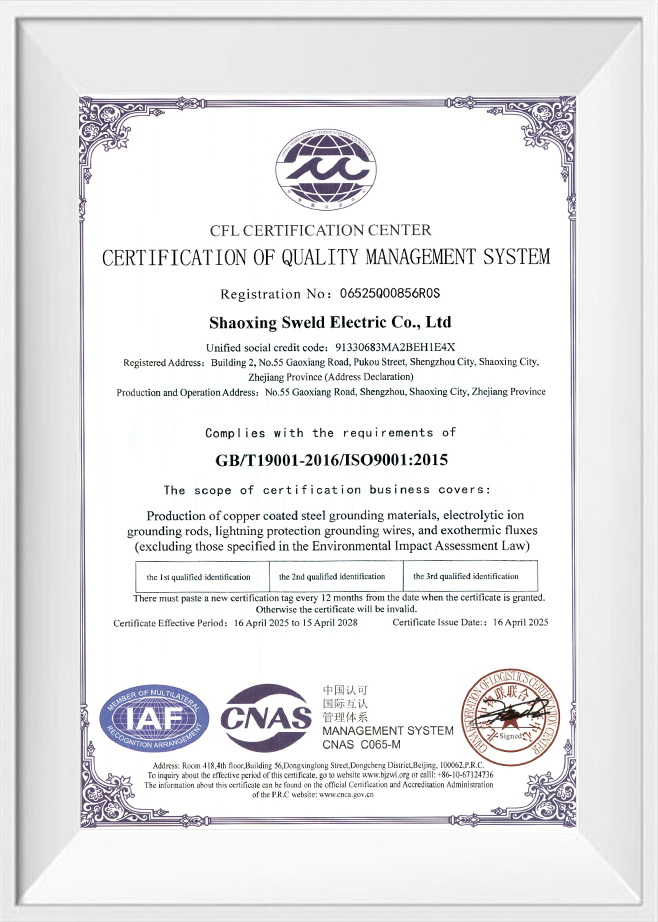
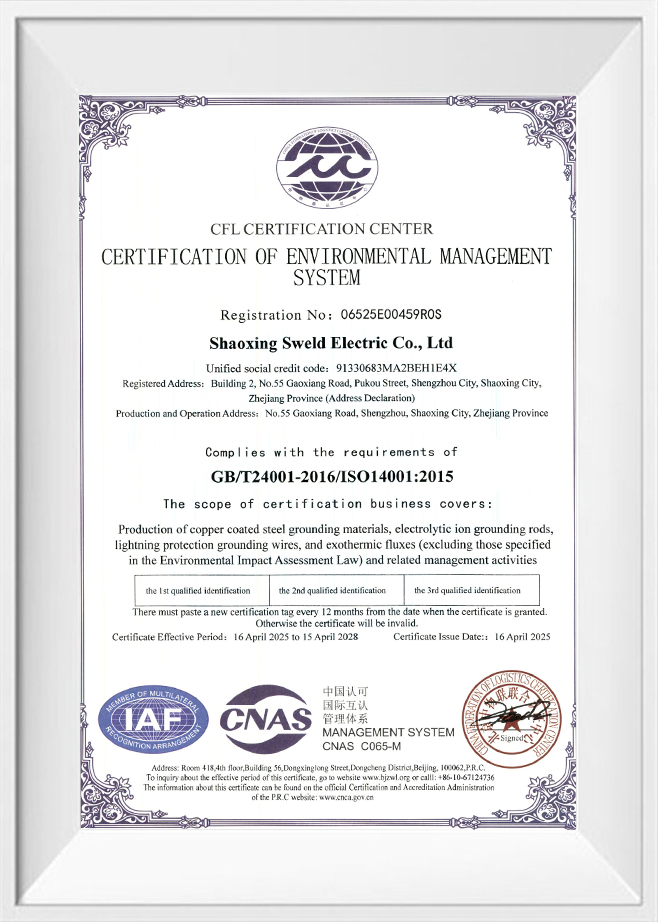
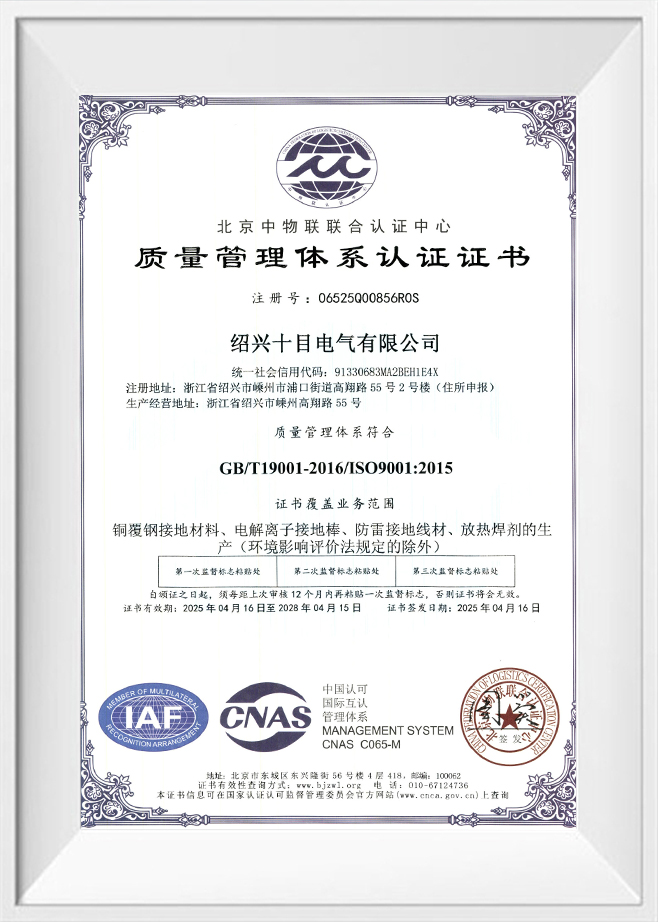
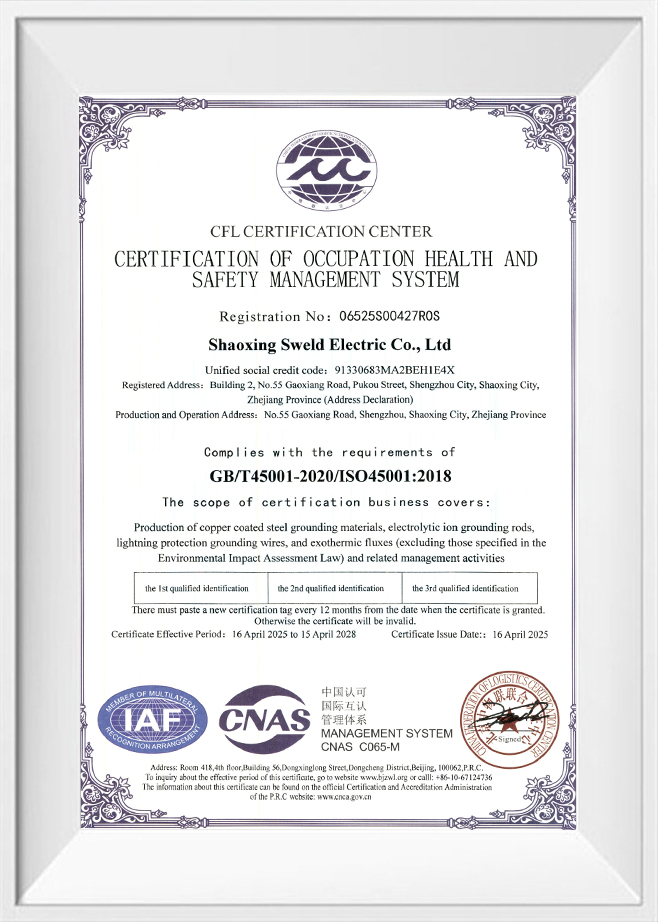
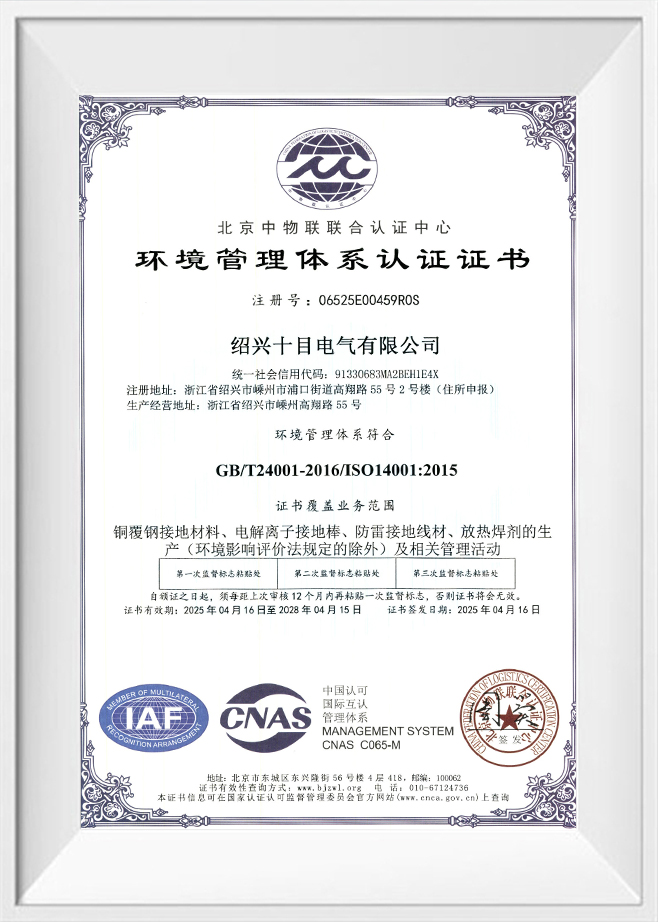
In the manufacturing process of a Brass Busbar, Shaoxing Sweld Electric Co., Ltd. leverages the professional expertise of its technical team. The company has passed ISO9001, ISO14001, and ISO45001 system certifications, ensuring high consistency in physical properties.
- Precision Machining: Utilizing 7 high-speed CNC machining centers, we can perform complex drilling, milling, and specialized shaping for a Brass Busbar. Precise hole positioning is critical for the installation of a Brass Busbar within narrow power distribution spaces.
- Integrated Solutions: Beyond the Brass Busbar itself, we provide exothermic welding powder and grounding molds to perfectly integrate the Brass Busbar into lightning protection grounding systems. With an annual production capacity of 500 tons of exothermic welding powder, Shaoxing Sweld Electric Co., Ltd. ensures molecular-level connections for brass materials.
Brass Busbar Classification and Specifications
In complex electrical system design, selecting the appropriate Brass Busbar specification is key to ensuring current transmission efficiency and structural reliability. Shaoxing Sweld Electric Co., Ltd. provides a range of products from standard to highly customized Brass Busbar series to meet different current-carrying and installation environment requirements.
Classification by Cross-sectional Shape
Based on installation space and current requirements, a Brass Busbar is typically divided into the following geometric forms:
- Rectangular Brass Busbar: The most common specification, featuring a large surface area for heat dissipation, mainly used as main busbars in distribution cabinets. The rectangular cross-section facilitates bolt connections with standard electrical terminals.
- Round/Rod Brass Busbar: Often used as connection parts for high-voltage switchgear or as conductive pillars, providing better electric field distribution and reducing the risk of point discharge.
- Special-shaped (U-type/L-type) Brass Busbar: Designed for narrow spaces. Shaoxing Sweld Electric Co., Ltd. utilizes its 7 high-speed CNC machining centers to achieve real-time design and precision molding of a Brass Busbar based on customer drawings.
Surface Treatment Specifications
To cope with different working environments, surface treatment for a Brass Busbar is crucial. Proper coating can significantly extend product life and optimize contact resistance:
- Bare Brass Busbar: Suitable for dry, non-corrosive environments where appearance requirements are not high, often used for low-cost grounding bars.
- Tin-plated Brass Busbar: The most common treatment, greatly improving the oxidation resistance of a Brass Busbar and reducing contact resistance to prevent electrochemical corrosion. The tin layer also offers excellent solderability.
- Nickel-plated Brass Busbar: Features extremely high hardness and wear resistance, suitable for high-temperature or electrical contact surfaces requiring frequent plugging. It has a bright silver appearance for industrial aesthetics.
Common Technical Specifications Comparison
The table below shows the performance comparison of common material grades of Brass Busbar produced by Shaoxing Sweld Electric Co., Ltd. to assist in selection based on conductivity needs:
| Performance Indicator | H62 Grade Brass Busbar | H65 Grade Brass Busbar | Remarks |
| Copper Content (%) | 60.5 - 63.5 | 63.5 - 68.0 | H65 has better plasticity |
| Conductivity (MS/m) | 15 or more | 16 or more | Depends on processing |
| Elongation (%) | 15 or more | 20 or more | H65 easier for cold-work |
| Roughness (um) | Ra 1.6 - 3.2 | Ra 1.6 - 3.2 | Finely ground available |
| Accuracy (mm) | +/- 0.05 | +/- 0.05 | Guaranteed by Sweld CNC |
Customized Production Capability
As an ISO9001 certified enterprise, Shaoxing Sweld Electric Co., Ltd. not only produces standard Brass Busbar specifications but also provides comprehensive electrical connection solutions.
- Real-time Molding: Our factory produces 180 sets of exothermic welding molds daily, allowing us to provide rapid mold matching and sampling services for grounding rods and stranded wires used with a Brass Busbar.
- Quality Compliance: All Brass Busbar products undergo testing in national certified laboratories to ensure that temperature rise and mechanical strength meet international electrical safety standards. Shaoxing Sweld Electric Co., Ltd. strictly controls thickness deviations and material uniformity.
Brass Busbar Manufacturing Process
The manufacturing of a Brass Busbar involves high-precision mechanical processing and strict material control. Shaoxing Sweld Electric Co., Ltd. converts raw materials into high-performance electrical components through advanced processes. The finesse of the process directly determines the contact resistance and long-term stability of the Brass Busbar.
Core Processing Flow
To ensure excellent electrical connection and structural integrity, we adopt the following standard processes for a Brass Busbar:
- Precision Cutting: Utilizing high-precision shearing equipment to process brass plates into required lengths. Shaoxing Sweld Electric Co., Ltd. strictly controls cut flatness to reduce burrs, ensuring a neat end surface for the Brass Busbar. Smooth cuts prevent injuries during installation and reduce discharge risks.
- CNC Punching and Drilling: A core competitiveness of the company, equipped with 7 high-speed CNC machining centers. This allows the hole position accuracy of a Brass Busbar to reach +/- 0.05mm, meeting the precision requirements of complex switch cabinets and exothermic welding molds.
- Bending: Brass is harder than pure copper, requiring more precise pressure control during bending. We set scientific bending radii (usually R = 1.5t to 2t) based on the Brass Busbar thickness to prevent outer cracking.
Process Parameter Comparison: Brass vs. Pure Copper
Because the yield strength of a Brass Busbar is higher than pure copper, its processing parameters differ significantly from copper busbars:
| Machining Index | Brass Busbar (H62) | Copper Busbar (T2) | Difference Explanation |
| Yield Strength (MPa) | Approx. 280 - 350 | Approx. 35 - 60 | Requires higher pressure |
| Machinability | Excellent (Easy chips) | Average (Sticky) | Better for CNC drilling |
| Bending Radius (R) | 2.0 x Thickness | 1.0 x Thickness | Brass has lower ductility |
| Stamping Pressure | High | Low | Higher mold hardness need |
Sweld Technical Assurance
The technical team at Shaoxing Sweld Electric Co., Ltd. has developed specific quality control plans for Brass Busbar processing:
- Mold Matching: With a daily capacity of 180 sets of exothermic welding molds, we can customize welding interfaces for a Brass Busbar to achieve efficient electrical connections.
- Stress Relief: For Brass Busbar products with large bending angles, we optimize the process to reduce residual stress, ensuring structural safety in vibrating environments.
- Compliance Testing: Every batch of Brass Busbar must pass mechanical and current-carrying capacity tests in internal and national laboratories.
Brass Busbar Main Application Fields
Due to its unique physical properties and high cost-effectiveness, the Brass Busbar is indispensable in modern electrical engineering. The Brass Busbar series produced by Shaoxing Sweld Electric Co., Ltd. is widely used in fields ranging from basic distribution to precision industrial control.
Power Distribution and Control Systems
In low-voltage distribution systems, a Brass Busbar often serves as a grounding or neutral busbar.
- Grounding Systems: Shaoxing Sweld Electric Co., Ltd. combines the Brass Busbar with self-produced exothermic welding powder and grounding rods to build efficient lightning protection networks. The hardness of brass ensures that bolts do not loosen under vibration.
- Switchgear Components: Used to support and connect components like circuit breakers. The Brass Busbar provides stable physical support while meeting conductive needs, especially in structures requiring direct tapping for screw locking.
Automotive and Transportation Equipment
In vehicle electrical architectures, a Brass Busbar is the core conductive skeleton of fuse boxes and Power Distribution Units (PDU).
- Vibration Resistance: Compared to pure copper, the higher tensile strength of a Brass Busbar allows it to withstand high-frequency vibrations during driving, avoiding metal fatigue.
- Fastening Reliability: Brass threads are more wear-resistant, suitable for automated torque tightening in automotive assembly, reducing scrap rates on production lines.
Industrial Automation and Machinery
The 7 high-speed CNC machining centers at Shaoxing Sweld Electric Co., Ltd. allow us to customize complex Brass Busbar structural parts for automation equipment.
- Transformer Connections: As a connection bar at the transformer outlet, a Brass Busbar effectively handles electromagnetic forces generated by large currents, reducing deformation.
- Welding Equipment: In resistance welding or exothermic welding equipment, the Brass Busbar is often selected as an electrode holder or main conductive beam due to its arc erosion resistance.
Selection Parameters for Different Scenarios
| Application Scenario | Core Parameter | Recommended Spec | Reason |
| Lightning Protection | Corrosion Resistance | Tin-plated / Bare | For Sweld welding |
| Auto Fuse Box | Accuracy & Hardness | Nickel-plated | CNC precision for contact |
| LV Switchgear | Current & Cost | Tin-plated | Reduces cost vs copper |
| Decorative Hardware | Surface Finish | Polished | Balances look and function |
Industry Compliance and Sweld Solutions
As an ISO9001, ISO14001, and ISO45001 certified company, Shaoxing Sweld Electric Co., Ltd. ensures that our Brass Busbar meets strict safety standards in any field. We provide systematic matching, including grounding wires and lightning rods, and all products are verified by national laboratories for temperature rise and mechanical life.
Comparison: Brass Busbar vs. Copper Busbar
Designers often balance between a Brass Busbar and a pure Copper Busbar. While pure copper is the conductivity benchmark, the Brass Busbar, through precise alloying of copper and zinc, demonstrates incomparable advantages in specific industrial scenarios.
Shaoxing Sweld Electric Co., Ltd. suggests selecting materials based on current requirements, mechanical stress, and project costs.
Deep Comparison of Key Performance Indicators
| Feature Dimension | Brass Busbar (H62/H65) | Copper Busbar (T2) | Selection Suggestion |
| Conductivity (% IACS) | 25% - 40% | 97% or more | Copper for high power |
| Tensile Strength (MPa) | 330 - 540 | 200 - 300 | Brass for structural support |
| Vickers Hardness (HV) | 80 - 150 | 45 - 100 | Brass for threading |
| Machinability | Excellent | Average | Brass for complex parts |
| Cost Index | More cost-effective | High volatility | Brass for budget projects |
Why Prefer Brass Busbar in Specific Fields?
- Superior Mechanical Durability: Pure copper is soft and deforms easily as a fastener or support. The Brass Busbar from Shaoxing Sweld Electric Co., Ltd. has higher yield strength, and its threaded holes are wear-resistant, ensuring electrical connection points do not strip under high torque.
- Better Machining Precision: Brass generates less heat during CNC cutting and has higher dimensional stability. This allows Shaoxing Sweld Electric Co., Ltd. to efficiently produce complex Brass Busbar parts.
- Grounding Adaptability: In corrosive industrial environments, a Brass Busbar remains stable. Especially in grounding systems, when used with Shaoxing Sweld Electric Co., Ltd. exothermic welding powder, it forms extremely stable joints.
Economic Analysis
Pure copper costs are typically over 50% higher than brass. In scenarios where current capacity is not the primary indicator (such as grounding loops, signal transmission, or low-current distribution), using a Brass Busbar significantly reduces project material expenditures.
FAQ:
Is Brass Busbar conductivity sufficient to replace copper?
Q: Can a Brass Busbar replace copper in all circuits?
A: Not all. Its conductivity is about 28%-40% of pure copper. It is highly cost-effective for grounding loops, distribution cabinet structures, and signal transmission. To match pure copper current capacity, the Brass Busbar cross-section must be increased by approximately 1.5 to 2 times.
How to ensure connection stability?
Q: Does brass loosen or oxidize over time?
A: No, its higher hardness makes it less prone to creep than pure copper in bolt-tightening applications. Shaoxing Sweld Electric Co., Ltd. provides tin and nickel plating to prevent electrochemical corrosion.
| Bolt Spec | Copper Busbar Torque (N.m) | Brass Busbar Torque (N.m) |
| M8 | 15 - 20 | 20 - 25 |
| M10 | 30 - 35 | 40 - 45 |
| M12 | 50 - 60 | 70 - 80 |
Is it compatible with exothermic welding?
Q: Can your welding powder be used for a Brass Busbar?
A: Yes. Shaoxing Sweld Electric Co., Ltd. has an annual capacity of 500 tons of powder optimized for molecular fusion with a Brass Busbar. We provide specialized Sweld molds (180 sets daily) to ensure joints are pore-free and high-strength.
How to choose surface treatment?
Q: What coating should I use for indoor vs. outdoor?
A:
- Standard Indoor: Bare brass or tin-plated Brass Busbar.
- High Humidity/Coastal: Nickel-plated or thick tin-plated.
- High Temp: Nickel-plated Brass Busbar remains stable above 200C.
How does Sweld guarantee delivery?
Q: What is the cycle for a special Brass Busbar design?
A: With 7 high-speed CNC machining centers, Shaoxing Sweld Electric Co., Ltd. achieves "real-time design and rapid modeling." We can quickly schedule production for cutting, punching, and bending after drawing confirmation. All products meet ISO9001 standards and are tested in national labs. Our factory in Shengzhou, with over 50 professionals, ensures immediate response to every customer need.