


 English
Core Definition and Manufacturing Process of Hot-Dip Galvanized Grounding Rod
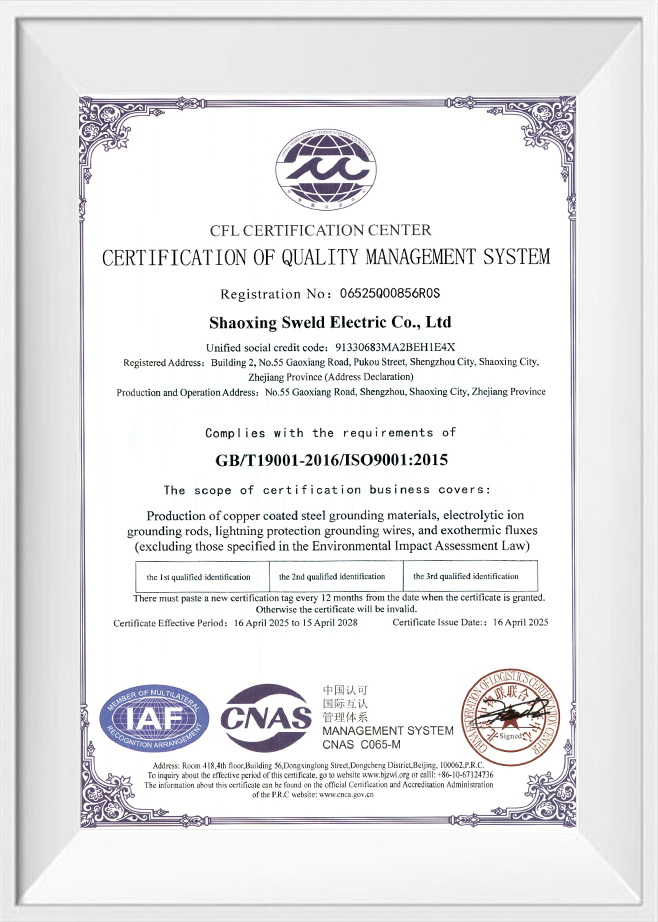
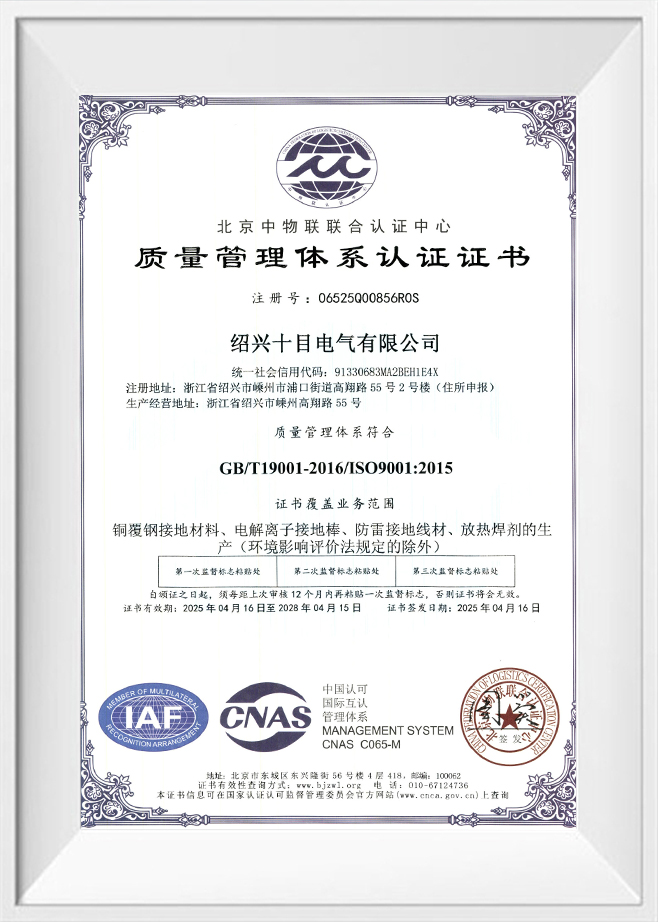
In modern lightning protection and grounding engineering, the Hot-Dip Galvanized Grounding Rod has become an indispensable basic component in the fields of power, telecommunications, and construction due to its excellent mechanical strength and high cost-effectiveness. As a professional manufacturer certified by the ISO9001 quality management system, Shaoxing Sweld Electric Co., Ltd. is always committed to improving the service life of grounding rods through exquisite craftsmanship.
What is a Hot-Dip Galvanized Grounding Rod
A Hot-Dip Galvanized Grounding Rod refers to a grounding conductor made of high-quality carbon steel that, after surface rust removal, is immersed in molten zinc at high temperatures. This process forms a uniform, dense, and strongly bonded zinc-iron alloy layer and a pure zinc layer on the surface. Its primary function is to provide a low-impedance path to the ground for lightning currents or fault currents.
Manufacturing Process at Shaoxing Sweld Electric Co., Ltd.
In our 3,000-square-meter modern production base located in Shengzhou, Shaoxing, we strictly implement standardized manufacturing procedures to ensure that every Hot-Dip Galvanized Grounding Rod meets international safety standards:
Substrate Selection: We choose high-strength Q235 or high-quality carbon steel to ensure the grounding rod does not bend easily when driven into hard soil. Shaoxing Sweld Electric Co., Ltd. strictly controls the entry of raw materials to ensure that the carbon content and mechanical properties are optimally balanced, providing a solid base for the hot-dip galvanizing reaction.
Surface Purification: Through the dual processes of physical polishing and chemical pickling, oxide scale, oil, and impurities are completely removed from the steel surface. This is a key step to ensure that the coating of the Hot-Dip Galvanized Grounding Rod does not peel or bubble.
Hot-Dip Galvanizing Treatment: The treated steel rod is immersed in a high-temperature zinc bath at approximately 450°C. At this temperature, zinc reacts with iron to form a protective layer much thicker than ordinary electroplating. This metallurgical bond layer will not fall off even under extreme mechanical pressure.
Cooling and Passivation: After a precisely controlled cooling process, the corrosion resistance stability of the coating is enhanced. Shaoxing Sweld Electric Co., Ltd. uses advanced post-treatment technology to form a passivation film on the coating surface, further improving its resistance to white rust during storage.
Technical Parameter Comparison: Hot-Dip Galvanizing vs. Ordinary Electroplating
| Performance Indicator | Hot-Dip Galvanized Grounding Rod | Electro-galvanized Rod |
| Coating Thickness | Typically ≥ 85 microns | Typically < 15 microns |
| Bonding Method | Metallurgical Bond (Zinc-iron alloy) | Physical Attachment |
| Corrosion Resistance Life | 30 - 50 years | 5 - 10 years |
| Mechanical Damage Resistance | Extremely strong, does not peel | Weak, easily peels during installation |
| Anti-corrosion Mechanism | Physical Shielding + Cathodic Protection | Physical Shielding only |
Manufacturing Strength Guarantee
Shaoxing Sweld Electric Co., Ltd. has a team of more than 50 technical experts and sales elites. We are not only experienced in the field of grounding rods but also have an annual production capacity of 500 tons of exothermic welding powder. This means we can provide a complete connection solution for your Hot-Dip Galvanized Grounding Rod. Whether through our 7 high-speed CNC machining centers to customize molds or using exothermic welding technology, we ensure your grounding system has the lowest contact resistance and strongest structural stability.
Technical Specifications and Standards of Hot-Dip Galvanized Grounding Rod
To meet the needs of different power systems and geological conditions worldwide, the Hot-Dip Galvanized Grounding Rod produced by Shaoxing Sweld Electric Co., Ltd. strictly follows international standards such as ASTM A153, BS 7430, and GB/T 13912. We rely on our specialized factory and ISO9001 quality management system to ensure every rod provides reliable performance in complex soil environments.
Common Sizes and Specification Options
Our Hot-Dip Galvanized Grounding Rod is available in various diameters and lengths to adapt to everything from residential buildings to large substations.
| Specification Type | Common Diameter | Common Length | Tip Type |
| Imperial Units | 1/2", 5/8", 3/4" | 4ft, 5ft, 8ft, 10ft | Pointed Tip |
| Metric Units | 12mm, 14.2mm, 16mm, 20mm | 1.0m, 1.5m, 2.0m, 3.0m | Pointed or Flat |
Thanks to the 7 high-speed CNC machining centers equipped by Shaoxing Sweld Electric Co., Ltd., we can provide high-precision design and manufacturing for thread ends or special shapes of the Hot-Dip Galvanized Grounding Rod according to specific customer drawings. Whether it is Metric M threads or American UNC threads, we ensure high tolerance accuracy.
Core Technical Parameters and Standards
In grounding engineering, the galvanizing quality of the Hot-Dip Galvanized Grounding Rod directly determines the acceptance rate of the project.
Coating Thickness: Our standard products have a galvanizing thickness higher than 85 microns, ensuring strong corrosion resistance in acidic or humid soil.
Verticality and Straightness: The deviation is controlled within ≤ 1.0mm/m, ensuring that the grounding rod does not deviate from the intended path when driven mechanically into the ground.
Tensile Strength: Using high-quality steel, the tensile strength is usually between 350MPa and 550MPa, capable of withstanding high-intensity hammer blows.
Specification Differences of Hot-Dip Galvanized Grounding Rod
| Parameter | Industrial Standard (Heavy Duty) | Commercial Standard |
| Core Substrate | High Carbon Steel | Low Carbon Steel (Q235) |
| Galvanizing Process | Deep Hot-Dip (Double Dipped) | Standard Hot-Dip |
| Average Thickness | ≥ 100 microns | Approx. 85 microns |
| Environment | Saline-Alkali, Acidic soil, Substations | General construction, Residential |
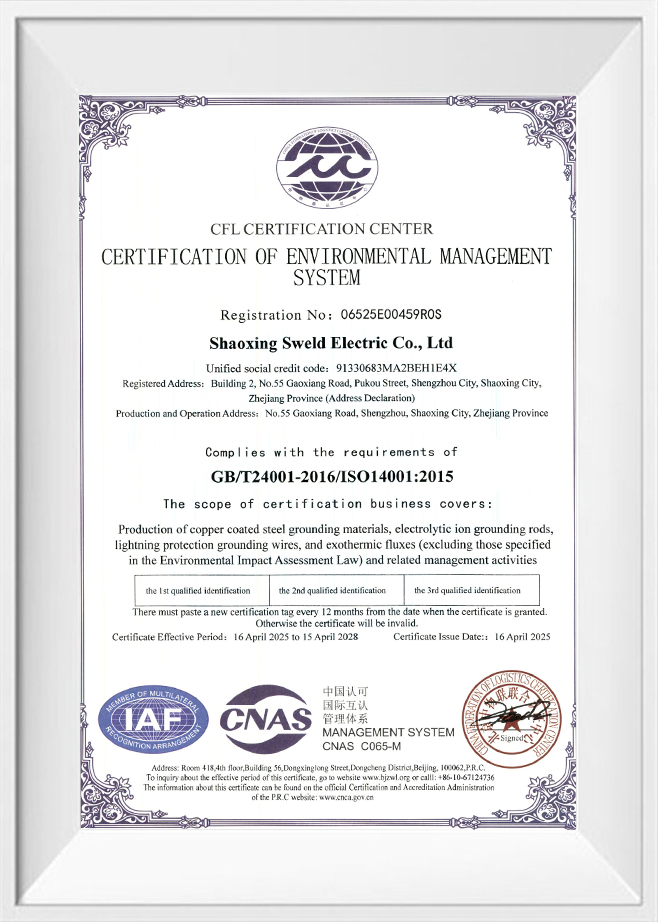
Shaoxing Sweld Electric Co., Ltd. has passed ISO14001 and ISO45001 certifications. Our Hot-Dip Galvanized Grounding Rod has passed rigorous testing in national laboratories, including adhesion tests and mechanical tensile tests, ensuring stability in extreme geographical environments.
Corrosion Mechanism and Durability of Hot-Dip Galvanized Grounding Rod
The Hot-Dip Galvanized Grounding Rod from Shaoxing Sweld Electric Co., Ltd. is optimized for underground chemical corrosion. Our products provide decades of stable grounding protection based on our expertise in metal surface treatment.
Dual Protection Mechanism
A Hot-Dip Galvanized Grounding Rod is more durable than ordinary steel due to two main factors:
Physical Shielding Layer: The molten zinc forms a zinc-iron alloy layer that isolates the steel core from moisture and oxygen. Shaoxing Sweld Electric Co., Ltd. ensures a molecular-level bond, eliminating moisture penetration.
Sacrificial Anode Protection: If the Hot-Dip Galvanized Grounding Rod is scratched during installation, exposing the steel, the zinc layer acts as an anode and oxidizes first. This electrochemical reaction protects the steel core from corrosion. This makes the Hot-Dip Galvanized Grounding Rod more tolerant of harsh construction than simple coated rods.
Performance in Different Soil Environments
| Soil Type | Corrosion Rate (mm/year) | Expected Life (Years) | Performance |
| Dry Sandy Soil | < 0.001 | 50+ | Excellent |
| Neutral Clay | 0.002 - 0.005 | 40 - 50 | Stable |
| Moist/Acidic Soil | 0.005 - 0.01 | 25 - 35 | Good |
| High Saline | 0.01 - 0.02 | 15 - 25 | Requires thick coating |
Why Choose Hot-Dip Galvanizing?
| Feature | Hot-Dip Galvanized Grounding Rod | Copper Bonded Rod |
| Stability | Stable in sulfur/oxidizing soils | Susceptible to sulfide corrosion |
| Compatibility | No galvanic risk with steel parts | Risk of electrolytic corrosion |
| Mechanical | High hardness, scratch resistant | Copper layer is soft and easily damaged |
Shaoxing Sweld Electric Co., Ltd. recommends using our self-developed exothermic welding powder and molds with the Hot-Dip Galvanized Grounding Rod for long-term safety. Our ISO14001 certified process ensures performance while meeting environmental requirements.
Installation Guide and Best Practices for Hot-Dip Galvanized Grounding Rod
Correct installation is the prerequisite for the performance of the Hot-Dip Galvanized Grounding Rod. Shaoxing Sweld Electric Co., Ltd. provides a standardized installation and connection scheme for customers.
Installation Methods
Vertical Installation: The rod should be driven vertically, ensuring at least 2.45 meters of length is in contact with the soil. This is the most effective layout for the Hot-Dip Galvanized Grounding Rod.
Inclined Installation: If shallow rock prevents vertical driving, an angle not exceeding 45 degrees is permitted.
Horizontal Burial: In extreme rocky areas, a trench 0.75m deep can be used. In this case, the number of Hot-Dip Galvanized Grounding Rod units must be increased to compensate for the dissipation area.
Connection Technology Comparison
| Method | Description | Scenario | Advantage |
| Exothermic Welding | Molecular-level permanent bond | Substations, data centers | No loosening, surge resistant |
| Mechanical Clamp | Physical contact via bolts | Temporary power, residential | Easy installation, no special tools |
Shaoxing Sweld Electric Co., Ltd. has a capacity of 500 tons of powder and 180 sets of molds daily to provide a perfect fit for your Hot-Dip Galvanized Grounding Rod.
Key Installation Parameters
Driving Depth: The top of the rod should be 0.15m to 0.5m below the surface to avoid dry-wet cycles.
Spacing: Spacing should be no less than twice the rod length to reduce the shielding effect.
Driving Tools: Use professional driving heads to prevent deforming the Hot-Dip Galvanized Grounding Rod or damaging the zinc layer.
Located in Shengzhou, Shaoxing Sweld Electric Co., Ltd. ensures the best tolerance fit between rods and connectors, eliminating installation hurdles.
Industry Application Scenarios for Hot-Dip Galvanized Grounding Rod
The Hot-Dip Galvanized Grounding Rod is a preferred material for global infrastructure. Shaoxing Sweld Electric Co., Ltd. provides solutions for various demanding environments.
Power and Transmission
Substation Grids: Requires extremely low resistance. Using the Hot-Dip Galvanized Grounding Rod with our exothermic welding forms a high-efficiency grid.
Transmission Towers: Rods must work in gravel or hard soil. The zinc layer protection is vital for products from Shaoxing Sweld Electric Co., Ltd. during mechanical impact.
Telecom and Data Centers
The Hot-Dip Galvanized Grounding Rod provides a reliable path for 5G stations. The zinc layer ensures effectiveness for decades in humid mountainous areas.
Industrial and Petrochemical
Storage Tanks: The Hot-Dip Galvanized Grounding Rod is chemically stable in alkaline soils, preventing static accumulation. Shaoxing Sweld Electric Co., Ltd. supports large factory construction with high-capacity mold production.
Requirement Comparison by Industry
| Industry | Typical Diameter | Connection | Core Focus |
| Power | 16mm / 20mm | Exothermic Welding | Fault current capacity |
| Telecom | 14.2mm / 16mm | Clamp or Welding | Low impedance |
| Petrochemical | 20mm | Exothermic Welding | Explosion safety |
| Residential | 12mm / 14.2mm | Mechanical Clamp | Economy |
Shaoxing Sweld Electric Co., Ltd. provides a "rod + wire + mold + powder" one-stop solution. Our products ensure your electrical equipment is safe in high salt or dry regions.
FAQ
How long does a Hot-Dip Galvanized Grounding Rod last compared to copper-bonded rods?
A Hot-Dip Galvanized Grounding Rod typically lasts 30-50 years in neutral soil. Its advantage is sacrificial protection. While copper-bonded rods perform well in acidic soil, any damage leads to rapid steel core corrosion. For most industrial buildings, the solution from Shaoxing Sweld Electric Co., Ltd. is more cost-effective.
Does zinc thickness affect the grounding effect?
Resistance is determined by geometry and soil resistivity. Zinc thickness affects durability. The standard Hot-Dip Galvanized Grounding Rod from Shaoxing Sweld Electric Co., Ltd. has a thickness ≥ 85 microns, ensuring the rod maintains its cross-section over decades.
How do you protect the rod in rocky soil?
Driving Head: Use a driving head to avoid damage to the coating. Pre-drilling: In hard ground, pre-drill a hole and use backfill. Shaoxing Sweld Electric Co., Ltd. provides the necessary carbide tips for hard soil.
Why is exothermic welding required for my project?
Mechanical connections can loosen over time. Shaoxing Sweld Electric Co., Ltd. produces 500 tons of powder to provide welding that fuses the Hot-Dip Galvanized Grounding Rod and conductor into one piece. This molecular bond matches the rod's lifespan.
Can Shaoxing Sweld Electric Co., Ltd. provide customized rods?
Yes. We have 7 CNC centers to customize lengths, diameters, and threads. We provide rapid delivery for mass production with special packaging certificates for global logistics.
Is this rod suitable for extremely acidic soil?
Zinc consumes faster at pH < 4. In such cases, Shaoxing Sweld Electric Co., Ltd. recommends using physical backfill or increasing the zinc thickness. Our technical team can provide a plan based on your soil report.