


 English
Copper-Clad Steel Stranded Wire represents a sophisticated composite conductor engineered to solve the historical conflict between mechanical robustness and electrical efficiency. By utilizing a high-strength steel core and a molecularly bonded copper cladding, this material offers a synergistic performance profile that neither pure copper nor pure steel can achieve independently. This product is particularly critical in large-scale grounding grids and long-span overhead lines where traditional materials often fail to meet the dual requirements of conductivity and structural longevity.
How Does the Metallurgical Synergy of Copper-Clad Steel Stranded Wire Achieve Optimal Balance Between Tensile Strength and Electrical Conductivity?
The engineering of Copper-Clad Steel Stranded Wire is rooted in the strategic layering of materials to exploit their individual strengths while mitigating their weaknesses. This design philosophy recognizes that while copper provides the ideal pathway for electrons, its physical softness limits its application in high-stress environments. By precision-bonding these materials at the molecular level, we create a conductor that possesses the "bones" of steel and the "skin" of copper, ensuring that the finished cable can withstand extreme tension without sacrificing the rapid discharge capabilities required for modern electrical safety.
Structural Core Dynamics
High-Carbon Steel Backbone: The internal core of each individual strand consists of premium-grade high-carbon steel, providing the primary tensile strength required for long-span installations. This robust core prevents the "creep" phenomenon or permanent elongation commonly seen in pure copper conductors under thermal or mechanical stress, ensuring the line maintains its structural geometry and safety clearances over decades of service even in high-tension environments.
Load Distribution: In a stranded configuration, the helical twist allows the tensile load to be shared uniformly across multiple filaments. This geometry converts axial tension into radial compression, effectively "locking" the strands together under high stress, which significantly enhances the wire's resistance to snapping during extreme weather events, seismic shifts, or sudden mechanical impacts caused by falling debris.
Shaoxing Sweld Electric Co., Ltd. Precision: Utilizing 7 high-speed CNC machining centers, Sweld ensures that the twisting pitch (lay length) is perfectly uniform throughout the entire production run. Inconsistent twisting leads to localized stress concentrations and uneven electrical distribution; Sweld’s precision engineering eliminates these potential failure points, providing a more stable and predictable conductor that handles mechanical fatigue far better than standard industry alternatives.
Electrical Performance through Skin Effect
Copper Cladding Efficiency: Since high-frequency currents—such as lightning surges or high-voltage AC fault currents—travel primarily on the outer "skin" of a conductor, the thick, high-purity copper layer handles the majority of the electrical load. This ensures that the conductor remains highly efficient for surge protection without needing the entire volume to be made of expensive solid copper, making it a cost-effective yet high-performance solution.
Conductivity Grades: Depending on the specific project requirements and soil resistivity data, the copper layer thickness can be adjusted to provide 21%, 30%, or 40% IACS conductivity. This flexibility allows electrical engineers to precisely tailor the conductor's impedance to match the anticipated fault current levels and grounding resistance targets of the specific installation site, optimizing both safety and material usage.
Thermal Mass Management: During a massive electrical fault, the copper layer provides the immediate low-resistance conduction path to ground, while the steel core acts as a high-capacity thermal sink. This prevents the wire from reaching its annealing or melting point as quickly as solid copper might, preserving the physical integrity of the grounding grid during catastrophic failures and ensuring the system remains operational for subsequent discharges.
Molecular Bonding Technology
Atomic-Level Fusion: Unlike mechanical cladding or simple plating, Sweld utilizes an advanced molecular bonding process that fuses the two metals at an atomic level. This ensures that the copper and steel expand and contract as a single unit during extreme thermal cycles, preventing any internal gaps or "voids" that could lead to galvanic corrosion at the interface between the two dissimilar metals.
Anti-Flaking Integrity: This bond is so strong that the wire can be twisted, coiled, or bent at extreme angles during installation without the copper layer peeling or flaking away from the steel. This is critical for maintaining the conductor's cross-sectional integrity and ensuring that no part of the steel core is ever exposed to corrosive environmental elements, even in high-stress installation scenarios.
Uniformity Control: Sweld’s technical team monitors the cladding thickness at every micro-stage of production using precision gauging tools, ensuring that the corrosion-resistant barrier is never compromised, even in the smallest filament diameters. This rigorous quality control ensures that the minimum copper thickness is maintained consistently across the entire surface area of every strand in the bundle.
Why is Copper-Clad Steel Stranded Wire the Ideal Conductor for Harsh Climates and Large-Span Infrastructure Projects?
The combination of environmental resilience and mechanical toughness makes this conductor indispensable for projects facing aggressive geographical or atmospheric conditions. In regions characterized by high soil acidity, extreme salt spray, or dramatic temperature fluctuations, traditional galvanized or copper materials often undergo rapid degradation. Copper-clad steel overcomes these limitations by providing a permanent, non-sacrificial barrier against corrosion while maintaining the high-tensile properties needed to bridge massive gaps in rugged terrain. This dual-purpose durability ensures that infrastructure remains safe and operational in the world's most demanding climates.
Superior Corrosion Resistance in Aggressive Soils
Permanent Barrier Protection: Copper is naturally resistant to soil-based electrolytes, acidic moisture, and organic salts found in damp earth. By encasing the steel core in a dense, uniform copper layer, the internal structure is shielded from the oxidation and pitting that typically destroys galvanized steel conductors within a few years of burial, effectively extending the system's life by decades.
Long-Term Impedance Stability: Because the copper layer does not degrade sacrificially like zinc coatings (which eventually dissolve), the grounding system maintains a constant, low-resistance value for 30 to 50 years. This reliability ensures that safety protocols remain effective for the entire lifecycle of the facility without the need for frequent site testing, chemical soil treatment, or expensive replacement.
Salt Spray Resilience: For coastal infrastructure, bridges, or offshore wind farms, Sweld’s high-purity copper cladding prevents salt-air-induced pitting and chemical degradation. This is a common cause of failure in power transmission lines near the ocean, and the use of copper-clad steel significantly extends the maintenance interval and improves the overall uptime of the electrical network.
Engineering Advantages for Large-Span Installations
Reduced Sag and Tension Management: The high tensile-to-weight ratio of Copper-Clad Steel allows for longer spans between support towers than solid copper wire. This reduces the total number of support structures (poles/towers) required for a project, which is particularly beneficial in rugged mountainous terrain, across wide river crossings, or in ecologically sensitive areas.
Safety Clearances: By minimizing "sag" through the use of a high-strength steel core, the wire ensures that mandatory safety clearances above railways, highways, and waterways are maintained even under heavy ice accumulation or high-speed wind loading. This structural rigidity prevents dangerous arc-overs and improves the reliability of the entire transport and power corridor.
Material Savings: Fewer support structures directly translate to lower labor costs, reduced foundation requirements, and a significantly smaller environmental footprint for large-scale utility projects. This makes the overall project more economically viable for developers while meeting or exceeding all international technical safety standards for power distribution.
Adaptability to Dynamic Mechanical Stress
Vibration Damping: The multi-strand design of Copper-Clad Steel Stranded Wire provides inherent damping against aeolian vibrations (high-frequency, low-amplitude wind-induced oscillations). This internal friction between strands prevents the fatigue cracking and "work hardening" that can occur in solid-core conductors over years of constant exposure to high winds.
Workability in the Field: Despite the presence of a high-strength steel core, the stranded nature of the wire remains flexible enough for easy routing around architectural foundations, through narrow conduits, or within complex grounding mats. This "bendability" speeds up installation time and ensures that the conductor can be placed exactly where the electrical design specifies without kinking.
Customized Hardware Synergy: Shaoxing Sweld Electric Co., Ltd. manufactures specialized connection parts that are specifically engineered to match the mechanical and thermal properties of the wire. Their CNC-manufactured molds and connectors ensure that every connection point is as strong as the wire itself, preventing slippage or failure at the anchor points during high-load periods.
How Does the Integration of Advanced Material Science and Precision Manufacturing Ensure the Safety of Modern Grounding Systems?
Safety in high-voltage environments depends on the reliability of the discharge path. Copper-Clad Steel Stranded Wire, when integrated into a complete system, provides an unmatched level of protection that safeguards both high-value equipment and human life. A grounding system is only as effective as its weakest link; therefore, the fusion of superior composite wire with precision-engineered connectors and advanced exothermic bonding creates a unified shield. This systemic approach ensures that fault currents and lightning surges are diverted to the earth with zero latency, maintaining the electrical equilibrium of the facility even under the most violent atmospheric disturbances.
High-Energy Surge Dissipation
Increased Surface Area: The stranded profile offers a significantly larger surface area than a solid rod or wire of the same volume. This is a critical factor for discharging high-frequency lightning energy efficiently into the earth, as surface area is the primary driver of surge dissipation efficiency in high-frequency events where "skin effect" dominates.
Low Surge Impedance: By optimizing the surface-to-volume ratio, Sweld’s wire reduces the transient surge impedance of the grounding network. This prevents "back-flashover" in substations and ensures that lightning energy is shunted to the ground before it can damage high-value assets like transformers or sensitive secondary digital electronics.
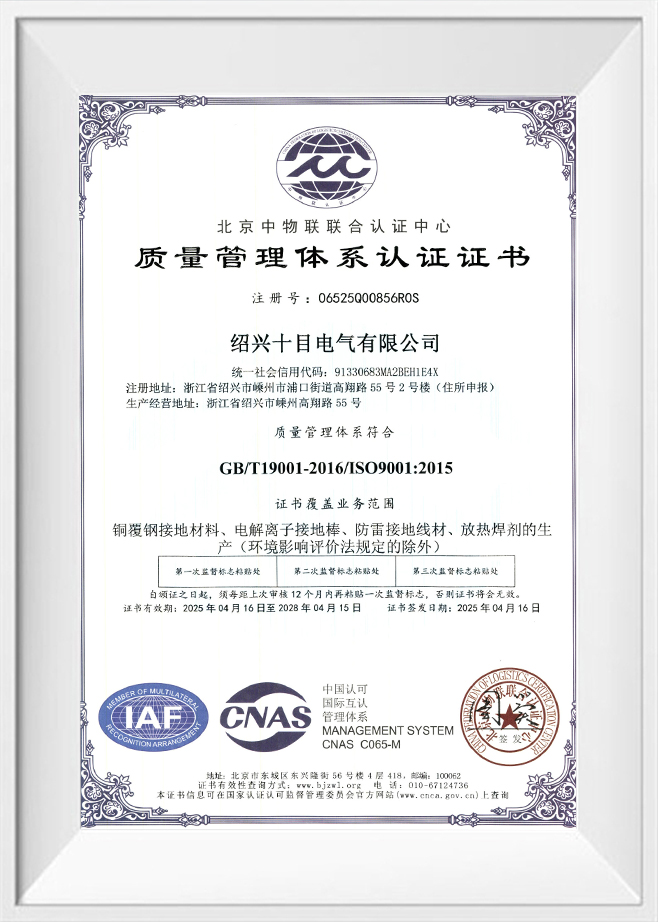
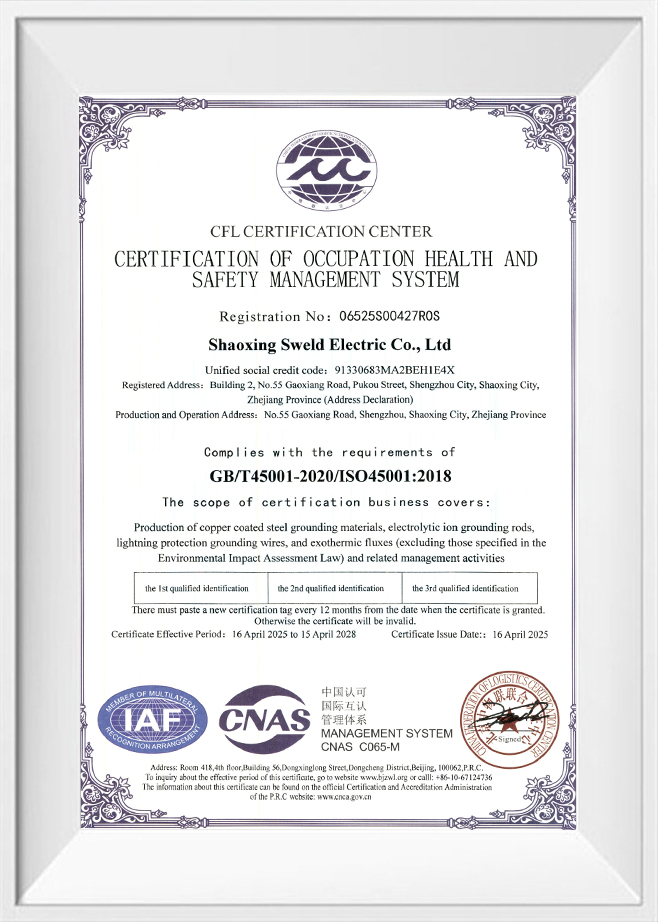
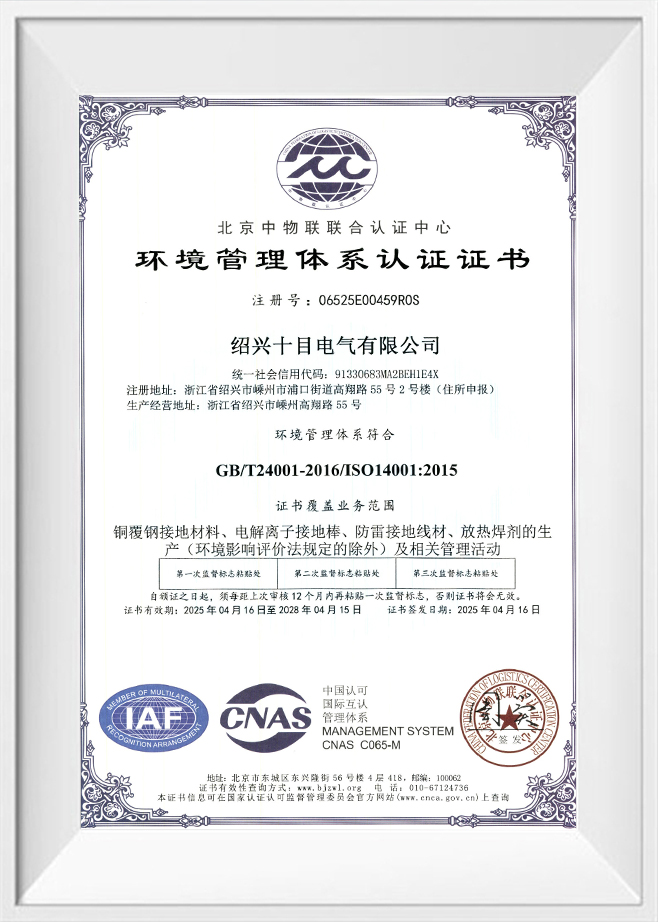
Verified Performance: All Sweld products undergo rigorous testing in national certification laboratories to verify their "current-carrying" capacity and fault-handling ability. This documentation provides project managers with the proof needed to certify critical infrastructure for power plants, oil and gas refineries, or telecommunications hubs against international safety codes.
The Critical Role of Exothermic Connection Technology
Elimination of Contact Resistance: Mechanical clamps and bolted joints are prone to loosening over time due to ground vibration, thermal expansion, and oxidation. Sweld’s annual production of 500 tons of exothermic welding powder provides the means to create permanent, molecularly fused joints that never loosen or increase in resistance over time.
Fusing the Strands: During the exothermic reaction, the Copper-Clad Steel Stranded Wire is fused into a solid copper mass at the joint. This process effectively seals the steel core inside the copper at the connection point, ensuring a zero-resistance path that is impervious to the ingress of corrosive moisture or chemical pollutants.
Systemic Compatibility: Sweld designs its welding molds specifically to handle the unique thermal profile and strand geometry of Copper-Clad Steel. This ensures that the heat of the reaction is perfectly balanced to bond the materials without damaging the surrounding copper cladding or causing excessive metallurgical stress to the high-strength steel core.
Technical Compliance and Global Reliability
Expert Oversight: With a professional technical team of over 50 experts, Sweld provides real-time design support to help engineers calculate the correct strand count and conductivity grades for their specific fault-current data, ensuring the grounding system is perfectly optimized for both long-term cost and immediate safety.
Global Logistics Safety: Sweld holds the "special dangerous package" certificate required for the international export of welding powders. This ensures that high-performance grounding kits—including all chemicals, molds, and conductors—reach international project sites safely, legally, and in compliance with all strict maritime and air freight regulations.
Integrated Solutions: From the lightning rod at the top of a structure to the grounding wire buried deep in the earth and the welding powder that connects them, Sweld provides a unified technical ecosystem. This "complete set" approach eliminates compatibility issues between components from different manufacturers, ensuring the highest level of system-wide reliability and long-term durability.
|
Performance Characteristic |
Copper-Clad Steel Stranded Wire (Sweld) |
Solid Copper Stranded Wire |
Galvanized Steel Stranded Wire |
|---|---|---|---|
|
Tensile Strength (MPa) |
High (550 - 900) |
Low (200 - 250) |
High (400 - 600) |
|
Electrical Conductivity (IACS %) |
21% - 40% (Optimized) |
100% |
8% - 12% |
|
Corrosion Resistance |
Excellent (Permanent Barrier) |
Excellent |
Poor (Sacrificial Layer) |
|
High-Frequency Performance |
Excellent (Skin Effect) |
Excellent |
Poor |
|
Resistance to Thermal Fatigue |
High |
Moderate |
Low |
|
Workability / Flexibility |
Excellent |
Very High (Too Soft) |
Low (Stiff) |
|
Theft Deterrent Value |
Low (Steel Core) |
High |
Very Low |
|
Vibration Damping |
High (Multi-Strand) |
Moderate |
Moderate |
|
Deep-Earth Driving Strength |
High |
Low |
High |
|
Connection Stability |
Permanent (Exothermic Weld) |
High |
Moderate |
|
Long-Span Sag Control |
Excellent |
Poor |
Moderate |
Detailed Analysis of Structural Integration and Operational Safety
The following points detail the complex interaction between material properties and installation environments:
Helical Geometry and Mechanical Locking
In a 7-strand or 19-strand configuration, the outer strands are wrapped in a precise helical pattern around a central core. Under tension, these outer strands compress inward toward the center, increasing the internal friction between layers and creating a rigid, load-bearing column that resists structural deformation even under seismic loads.
Sweld’s CNC-controlled stranding equipment ensures that each individual filament has the exact same tension during the twisting process. This prevents "bird-caging" (strand separation) or uneven strand loading when the wire is under stress, which is vital for maintaining consistent electrical impedance and mechanical strength throughout the cable's length.
Thermal Expansion Management
Copper and steel have significantly different coefficients of thermal expansion. Sweld’s advanced molecular cladding process creates a microscopic transition zone between the two metals that absorbs the differential stress during the rapid temperature spikes caused by fault currents or lightning discharges.
By managing these thermal stresses at the molecular level, Sweld prevents microscopic delamination. This is the primary cause of internal "hidden" corrosion in low-quality composite conductors, where moisture seeps into cracks formed by thermal cycling and eventually rots the conductor from the inside out.
Manufacturing Excellence at Sweld
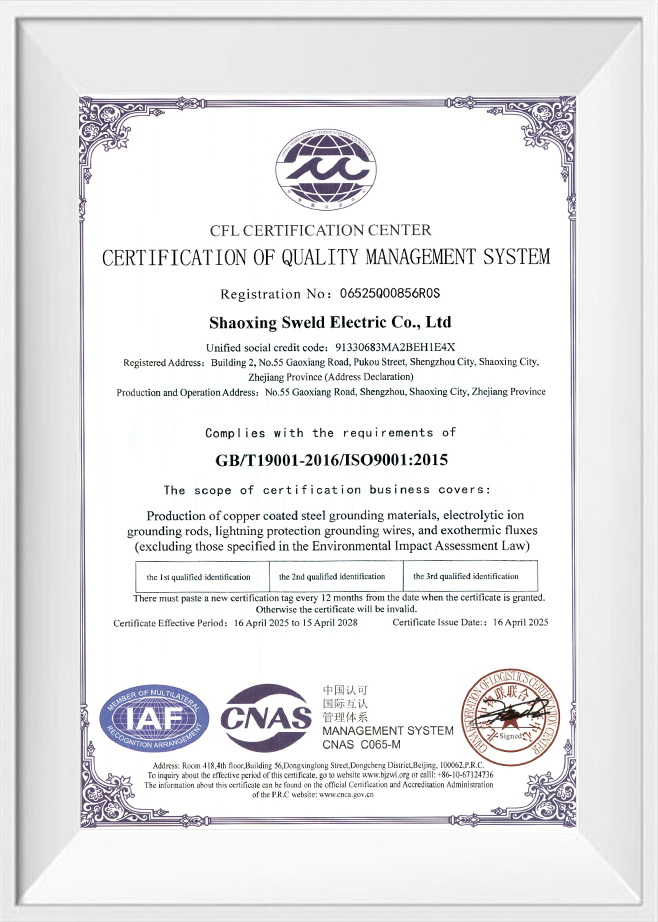
The use of 7 high-speed CNC machining centers allows Sweld to produce customized connection parts, connectors, and molds with tolerances as low as 0.01mm. This extreme precision ensures that the interface between the wire and the connection hardware is perfectly flush, minimizing contact resistance and preventing localized heating that could weaken the joint.
The 500-ton annual capacity for exothermic welding powder ensures that even the largest international infrastructure projects have a consistent and reliable supply of high-quality fusion materials. All products are verified through national certification laboratory testing, providing guaranteed reliability and performance for the world's most critical grounding and lightning protection facilities.