


 English
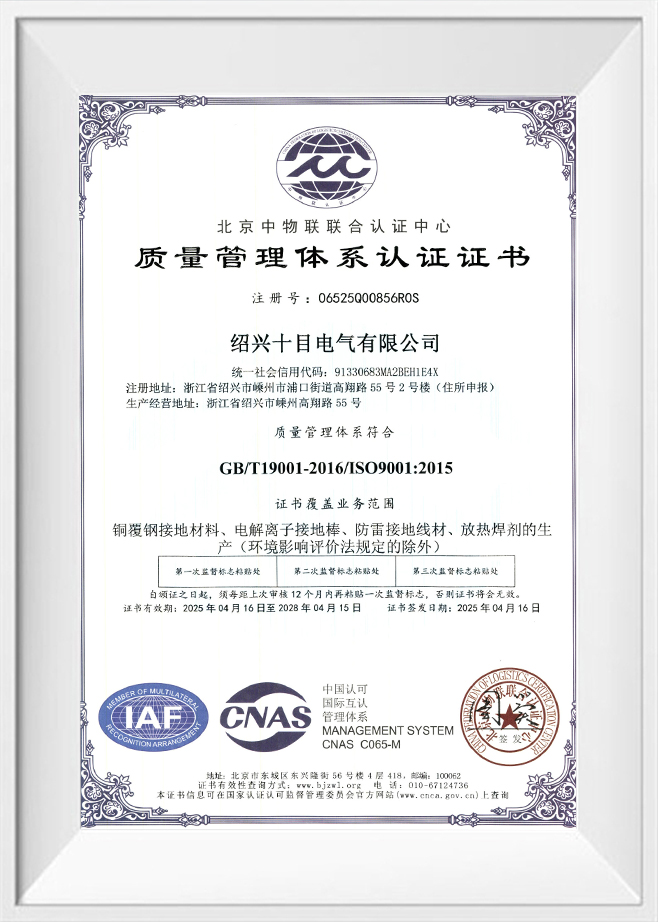
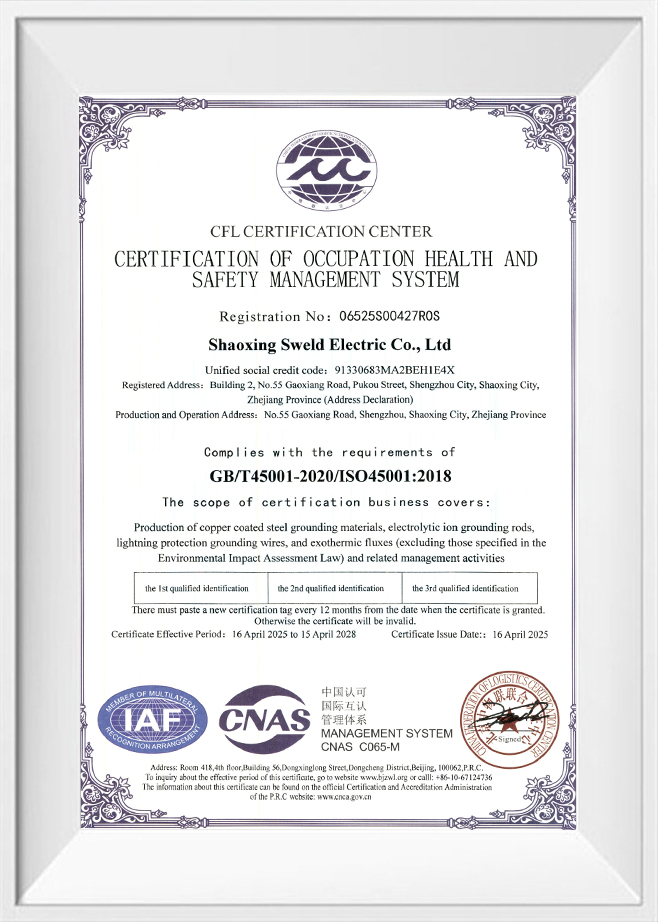
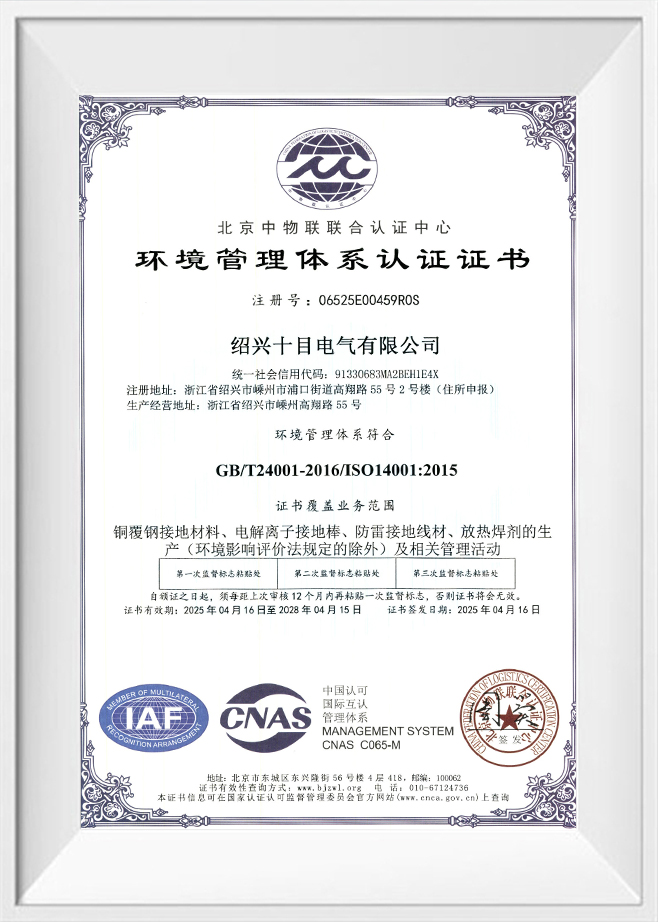
In the field of modern lightning protection, grounding, and telecommunications infrastructure, the choice of materials directly impacts the safety margin and construction costs of a system. Bare Copper-Clad Steel (CCS) Stranded Wire has emerged as a high-tech composite material that integrates the advantages of two metals, gradually replacing traditional pure copper conductors. As a global supplier of electrical connection materials, Shaoxing Sweld Electric Co., Ltd. leverages exquisite cladding processes and stranding technology to provide customers with premium CCS solutions that balance mechanical hardness with electrical performance.
How Does This “Bimetallic” Hybrid Structure Optimize the Balance Between Conductivity and Physical Strength?
The core of Bare Copper-Clad Steel Stranded Wire lies in its unique physical construction: it utilizes a high-carbon or low-carbon steel core, which is permanently bonded to a layer of high-purity oxygen-free copper through electroplating or cladding processes. At the production facilities of Shaoxing Sweld Electric Co., Ltd., this bond is not a simple physical covering but an atomic-level metallurgical bond. This structural design was originally intended to solve the two primary shortcomings of pure copper conductors in specific industrial applications—high cost and insufficient mechanical strength.
From an electrical engineering perspective, this combination perfectly utilizes the Skin Effect. When transmitting high-frequency signals or handling the instantaneous surge of a lightning strike, the electrical current does not distribute uniformly across the entire cross-section of the conductor; instead, it concentrates on the surface layer. Since the outer layer of CCS stranded wire is pure copper with excellent conductivity, its electrical performance in these scenarios is almost comparable to that of pure copper wire. Meanwhile, the internal steel core provides a tensile strength that pure copper simply cannot match. This means that in overhead lines, the wire can span longer distances without experiencing severe sagging or breaking due to wind loads, ice accumulation, or its own weight.
Shaoxing Sweld Electric Co., Ltd. has deeply researched the conductivity requirements of different application scenarios. Our CCS stranded wires are typically produced in various grades, such as 21% IACS, 30% IACS, and 40% IACS. By precisely controlling the thickness and uniformity of the copper layer, we ensure that the wire meets exact conductivity standards while maintaining the strength of the steel core. Furthermore, the tight bond between steel and copper addresses the issue of electrochemical corrosion in damp underground environments. Because the copper layer completely seals the steel core, moisture cannot penetrate, significantly extending the service life of grounding systems in acidic or alkaline soils. This “internal and external” optimized design makes our products the ideal choice for lightning protection in power plants, substations, and telecommunications base stations.
Why is the Stranding Process the Critical Factor in Enhancing the Engineering Life of Grounding Systems?
While a single solid conductor is common in some simple applications, Stranding offers irreplaceable technical advantages in complex industrial grounding and lightning protection networks. Shaoxing Sweld Electric Co., Ltd. employs a process of helically twisting multiple CCS filaments together, granting the material greater engineering possibilities.
The stranded structure significantly enhances the flexibility and maneuverability of the wire. At construction sites, grounding conductors often need to traverse complex cable trenches, bypass building foundations, or undergo 90-degree bends. Solid steel-core conductors are extremely hard and prone to stress concentration during bending, which can lead to copper layer cracking or steel core fracture. In contrast, the stranded wires precisely engineered by Shaoxing Sweld Electric Co., Ltd. allow each filament to undergo minor relative displacement within the structure, effectively dispersing bending stress. This superior physical elasticity not only reduces installation difficulty but also prevents hidden mechanical damage during construction.
From the perspective of lightning protection efficiency, the stranded structure increases the effective surface area of the conductor. Lightning current is a typical high-frequency transient current; increasing the surface area means providing more channels for charge flow. In our factory, the stranding pitch is strictly calculated through scientific methods to ensure that the wire maintains structural compactness while maximizing its electrical heat dissipation and charge discharge capabilities.
Shaoxing Sweld Electric Co., Ltd. places special emphasis on stranding uniformity during production. If the stranding is too loose, moisture can easily enter the gaps between strands, causing internal corrosion. Our compact stranding process ensures that strands fit tightly together, forming a stable electrical path. For buried grounding grids, this structure can better withstand mechanical extrusion and shearing forces caused by soil settlement. This dedication to craftsmanship ensures that the grounding grid remains intact and reliable for the long term, even in areas with frequent seismic activity or significant soil movement.
How Does CCS Stranded Wire Demonstrate Superior Durability and Safety Over Pure Copper in Extreme Environments?
In many high-end engineering tenders, experts increasingly prefer Bare Copper-Clad Steel Stranded Wire—not just for cost control, but for its outstanding environmental adaptability in harsh conditions. As an expert in this industry, Shaoxing Sweld Electric Co., Ltd. positions CCS stranded wire as the “guardian of hardcore industrial environments.”
In chemical plants, along railway lines, or in coastal areas with high salt spray, electrical materials face the dual challenges of physical wear and chemical erosion. Pure copper is relatively soft and easily damaged by dragging during installation or by impact from debris during operation. CCS stranded wire, with its hardened steel core, possesses impact and abrasion resistance far exceeding that of pure copper. In underground grounding applications, CCS stranded wire can resist soil pressure caused by heavy vehicle traffic, ensuring the grounding circuit remains closed. A failed grounding circuit can lead to the destruction of equipment worth millions of dollars or even threaten lives; the products of Shaoxing Sweld Electric Co., Ltd. are designed specifically to eliminate such risks.
CCS stranded wire possesses a unique social attribute: Theft Deterrence. Because the copper layer and steel core are permanently metallurgically bonded, it is extremely difficult for recyclers to separate the copper. This makes the scrap value of CCS stranded wire much lower than that of pure copper. In remote telecommunications towers or substations, pure copper ground wires are often at risk of theft. Using our CCS stranded wire fundamentally reduces the likelihood of theft, thereby decreasing system downtime and subsequent maintenance costs caused by criminal activity.
To more clearly demonstrate the performance differences, please refer to the technical comparison data provided by the Shaoxing Sweld Electric Co., Ltd. laboratory:
| Performance Indicator | Pure Copper Stranded (Annealed) | Bare CCS Stranded (Sweld - 40%) | Engineering Value |
|---|---|---|---|
| Tensile Strength (MPa) | 200 - 250 | 500 - 800 (Based on Grade) | Reduces sag; high mechanical resistance |
| Thermal Stability | Prone to softening under heat | High; Steel maintains structure | Resists melting under short-circuit surges |
| Abrasion Resistance | Low (Soft texture) | Very High (Hard surface) | Ideal for complex terrain & buried grids |
| Theft Deterrence | Very Low (High target risk) | High (Low recycling value) | Reduces maintenance & security costs |
| Weight (kg/km) | 8.89 (High density) | ~8.15 (Lower density) | Reduces tower load and logistics costs |
| Corrosion Life | Excellent | Excellent (Copper barrier protection) | Ensures 30+ years of grid life |