


 English
  中文简体
中文简体 Copper-Clad Steel Rod: Definition and Manufacturing Process Analysis What is a C...
Read More
Home · News · Industry News · Copper Stranded Wire: Construction, Finishes, and Grounding Selection Guide
Industry News
Copper Stranded Wire: Construction, Finishes, and Grounding Selection Guide
2026-09-04Content
- 1 What Copper Stranded Wire Is and How It Is Built
- 2 Stranded vs. Solid Copper Wire: The Trade-offs That Decide the Specification
- 3 Bare, Tin-Plated, or PVC-Insulated: Matching the Finish to the Environment
- 4 Hard-Drawn or Flexible: Choosing the Temper Before the Size
- 5 Where Copper-Clad Steel Stranded Wire Earns Its Place
- 6 What to Put on the Purchase Order
- 7 Terminating Stranded Wire in Grounding Systems
Ask any crew that has pulled grounding conductors through a plant retrofit: solid wire fights every corner, while stranded wire feeds around beams, ducts, and conduit bends without kinking. That single handling difference explains why copper stranded wire has become the default conductor for grounding down leads, bonding jumpers, and lightning protection connections. The short answer for buyers: specify stranded copper whenever the run includes bends, vibration, or future maintenance access; keep solid wire for straight, permanently fixed, cost-driven earth runs; then choose between bare, tin-plated, PVC-insulated, and copper-clad steel variants based on the environment the conductor must survive for the next few decades.
What Copper Stranded Wire Is and How It Is Built
Copper stranded wire is a single electrical conductor made from several thin copper wires twisted together in a helical pattern, most commonly a concentric lay in which outer strands wind around a central wire. Specifications describe it with three pieces of data: the total cross-section, the number of strands, and the diameter of each individual wire. A 50 mm² conductor, for example, might be built from 19 strands of roughly 1.8 mm wire each; the same overall size could also be made from 7 thicker strands, and the two conductors will not bend the same way.
Standards make this explicit. IEC 60228 divides stranded conductors into classes, with Class 2 covering normal fixed-installation stranding and Class 5 covering highly flexible designs built from many fine wires. As strand count rises, flexibility improves, DC resistance rises slightly because of the microscopic air gaps between wires, and price rises because every wire must be drawn and then twisted into place. Those three consequences, flexibility, resistance, and cost, sit behind nearly every selection decision in the rest of this article.
Stranded vs. Solid Copper Wire: The Trade-offs That Decide the Specification
Neither construction is universally better; each wins under specific conditions, and most grounding projects contain both.
Flexibility and fatigue. Stranded wire tolerates repeated bending and vibration because the strands slide against one another, while a solid conductor work-hardens and eventually cracks at the flex point. This is decisive for bonding jumpers, equipment connections, and anything mounted on a tower or machine that moves.
Installation. In tight areas and inside buildings, installers can route stranded wire by hand around obstacles, which shortens installation time and reduces the chance of damage. Solid wire holds whatever shape it is bent into, which helps on neat straight runs but resists routing.
Conductivity. For the same nominal size, solid wire offers slightly lower DC resistance because its cross-section is continuous metal rather than a bundle with air gaps. At 50/60 Hz the difference is small; at higher frequencies, skin effect pushes current toward the conductor surface, and stranded construction provides more surface area per cross-section, which is one reason lightning protection practice favors it.
Cost and corrosion. Stranded wire carries a modest premium because of the extra drawing and stranding steps, and its larger combined surface area is more exposed to oxidation. Tin plating or PVC insulation offsets that exposure, which is why these finishes appear so consistently in grounding product ranges.
The verdict in practice: above grade, on structures, and at every equipment connection, stranded wins; buried horizontal earth electrodes and straight bus-style runs are the places where solid remains competitive.
Bare, Tin-Plated, or PVC-Insulated: Matching the Finish to the Environment
Most grounding suppliers offer the same conductor in several finishes, and the choice is environmental rather than electrical.
Bare copper is the baseline: maximum conductivity, lowest cost, and acceptable performance wherever the wire is buried in soil, housed inside an earth pit, or fixed within an enclosure. Copper oxide is reasonably conductive at low voltage, so bare stranded copper remains the standard for buried earth grids.
Tin-plated copper adds a thin tin layer that resists corrosion, improves solderability, and eases the galvanic interface problems that appear when copper sits against galvanized steel or aluminum for years. It is the sensible upgrade for coastal sites, industrial atmospheres, and any run terminated near dissimilar metals.
PVC insulation protects the conductor against abrasion, soil chemicals, and accidental contact, and its color coding helps crews separate earth, bonding, and lightning protection conductors sharing the same structure. PVC over tin-plated strands combines both protections for the harshest exposed installations.
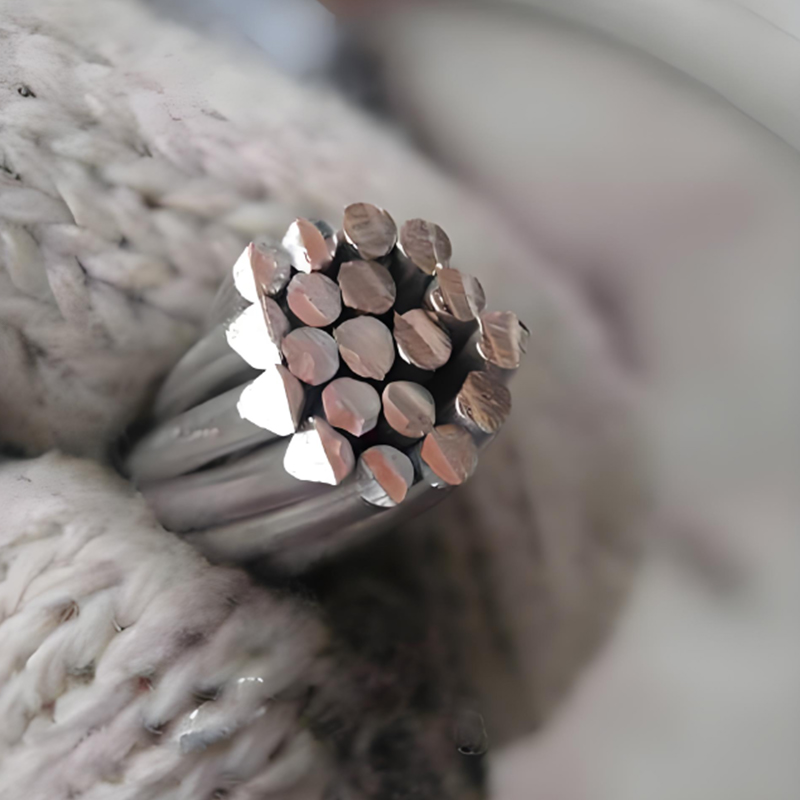 Tin-Plated Hard Copper Stranded WireTin-coated hard-drawn copper strands resist oxidation and corrosion while keeping strong mechanical rigidity for fixed installations. With PVC insulation and color coding, it suits harsh outdoor earthing, bonding, and lightning protection runs.View Product →
| Finish | What It Adds | Typical Applications | Main Limitation |
|---|---|---|---|
| Bare | Lowest cost, full conductivity | Buried earth grids, earth pits, enclosed connections | Exposed to oxidation and galvanic contact |
| Tin-plated | Corrosion resistance, solderability | Coastal and industrial sites, dissimilar-metal joints | Higher unit cost |
| PVC insulated | Mechanical and chemical protection, color coding | Exposed structural runs, contaminated soil, shared routings | Conductor not visible for inspection |
| PVC over tin-plated | Combined chemical and corrosion protection | Harshest exposed and underground service | Highest cost of the four |
Hard-Drawn or Flexible: Choosing the Temper Before the Size
Stranding decides how a wire bends; temper decides how it holds.
Hard-drawn copper stranded wire uses cold-worked wires, which raises tensile strength and produces a stiffer conductor. It suits runs that are clamped once and never moved: down conductors on buildings and towers, horizontal ties between earth rods, and any span where the wire must support itself without excessive sag.
Flexible copper stranded wire is fully annealed and stays pliable for its entire life. It is the right call for bonding jumpers across expansion joints, connections to transformers and switchgear that are opened during maintenance, vibrating equipment, and temporary grounding sets that crews coil and uncoil daily. A simple site rule covers most cases: if the conductor will be bent again after installation, or is attached to anything that moves, specify flexible; if it lives clamped in one position, hard-drawn delivers more mechanical performance for the same cross-section.
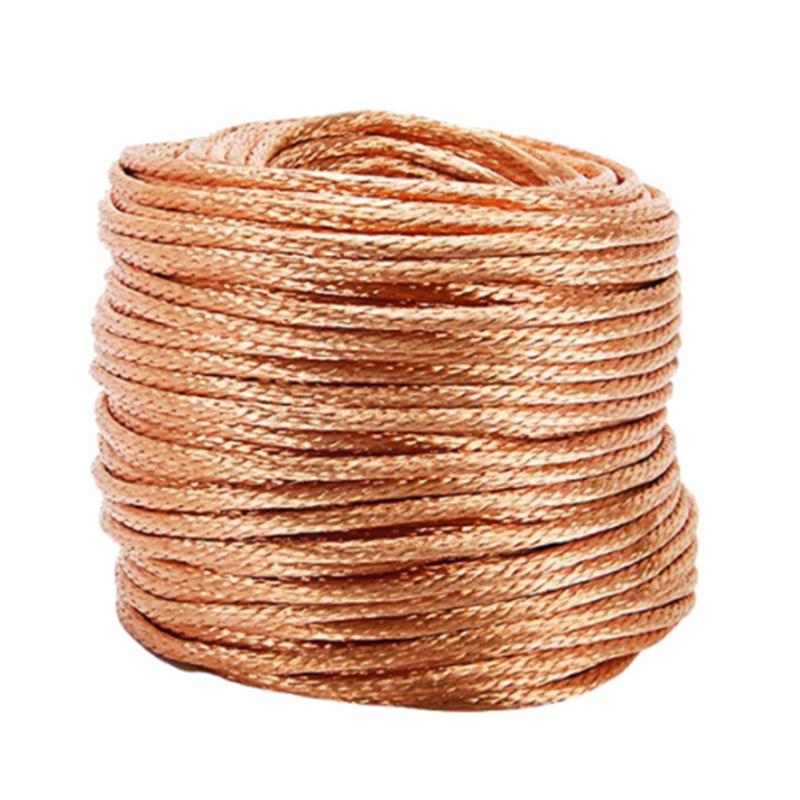 Bare Flexible Copper Stranded WireMade of many fine annealed copper filaments, this bare conductor stays pliable for repeated bending and movement. It is a practical choice for bonding jumpers, transformer connections, and grounding sets handled daily on site.View Product →
Where Copper-Clad Steel Stranded Wire Earns Its Place
Pure copper gives way to copper-clad steel stranded wire when tension, not conductivity, becomes the limiting factor. A steel core carries the mechanical load while the copper layer provides the conductive, corrosion-resistant surface, so the conductor survives long spans between towers, overhead earth wires, and long horizontal runs where soft copper would stretch, creep, or snap under combined wind and ice loading.
The trade-offs are equally clear: higher DC resistance than an equal-size pure copper conductor, and a stiffer construction that is less forgiving to terminate. That makes copper-clad steel a poor fit for short equipment bonds and a strong fit for line work and long structural spans. If you are weighing copper-clad steel against pure copper or galvanized steel for a specific project, the material-level differences in cladding, conductivity, and corrosion behavior are set out in our grounding material selection guide.
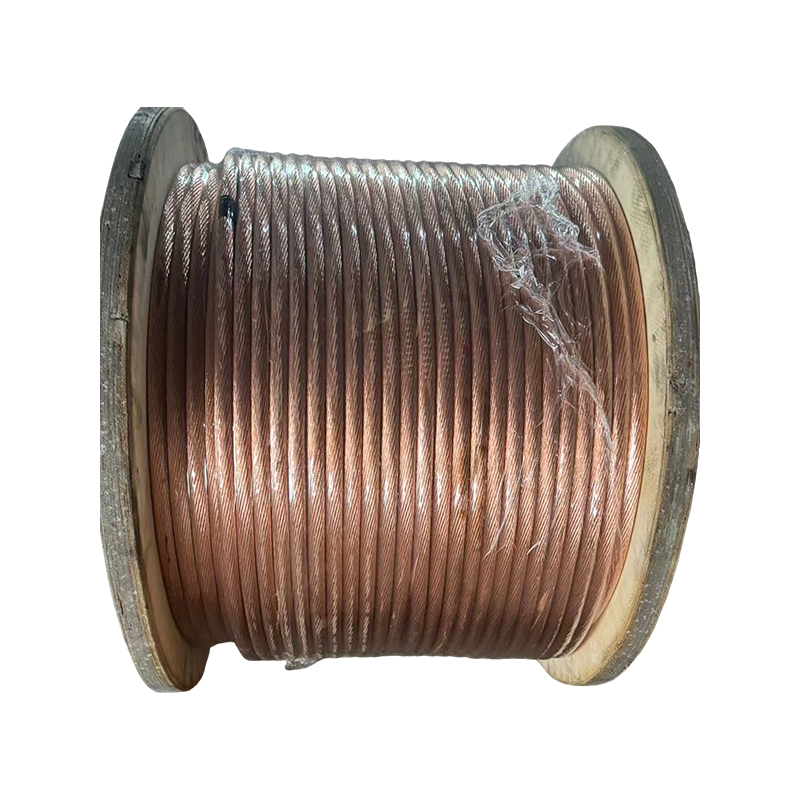 Bare Copper-Clad Steel Stranded WireA steel core carries mechanical load while the copper cladding provides conductive, corrosion-resistant surfaces. This combination suits long spans, overhead earth wires, and grounding where tension, not flexibility, is the limiting factor.View Product →
What to Put on the Purchase Order
Stranded wire is easy to order badly, because two conductors with identical cross-sections can behave very differently once strand count, temper, and finish differ. Five lines of specification remove most of that risk:
- Size and standard: cross-section in mm² together with the IEC 60228 class, or the AWG size with its stranding class, so both parties mean the same conductor.
- Stranding detail: strand count and individual wire diameter, for example 19 strands of 1.78 mm, since this controls flexibility and must match your termination tooling.
- Temper: hard-drawn, medium-hard, or soft, matched to the fixed-run or flexible duty described above.
- Finish: bare, tin-plated, PVC, or PVC over tin-plated, selected from the environment comparison earlier in this article.
- Documentation: resistance and tensile test certificates per lot, plus agreed reel lengths and packaging so site handling is planned before delivery.
One detail saves the most rework: confirm strand count before placing a bulk order. Compression lug dies and exothermic welding molds are sized for specific conductor constructions, and a 19-strand conductor of one cross-section will not seat correctly in tooling cut for a 37-strand conductor of the same size.
Terminating Stranded Wire in Grounding Systems
Three connection methods cover nearly all grounding work with stranded copper.
Compression lugs, such as DT-type copper terminals, are the fastest option for connections to equipment or busbars; the crimp compresses the strands into a gas-tight mass and prevents them from splaying. Mechanical clamps, including U-type and V-type ground clamps and cross clamps, allow disconnection and reinspection, which matters at test points, earth pits, and temporary bonding positions.
Exothermic welding produces a permanent connection with no contact resistance and no loosening over time, which is why it dominates lightning protection and critical earthing joints. Molds are available for the node types stranded wire actually meets on site: horizontal T-branches off a stranded main, vertical T-connections from stranded wire down to steel ground rods, and terminations onto pipes or steel plates. Preparation matters more here than with solid wire: strands must be cleaned, dried, and spread slightly so the molten copper flows between them, because damp or oily strands cause porosity and a weak weld.
Copper stranded wire is not a premium version of solid wire; it is a different tool selected for a different duty. Let the installation decide the construction: bends, vibration, and future maintenance point to stranded, with flexible temper for anything that moves and hard-drawn temper for anything that does not. Let the environment decide the finish, from bare copper in protected soil to tin-plated or PVC-covered conductors in coastal, industrial, or exposed service. Let tension, not conductivity, push you toward copper-clad steel on long spans. Confirm the strand count against your termination tooling, request test certificates with the shipment, and the conductor that arrives on site will behave exactly the way the specification promised.
PREV: How Lightning Rods Work: What Affects Their Effectiveness and Safe Grounding
NEXT: Stranded vs Solid Wire: Choosing the Right Electrical Conductor for Your Job
Contact Us
Your email address will not be published. Required field are marked*
News
-
-
Choose a stranded conductor when it will flex, move, or vibrate; choose a solid...
Read More -
Recently, as global requirements for power safety and lightning protection groun...
Read More -
Exothermic welding is a process that fuses two metal conductors into a single m...
Read More -
An air terminal by itself does not protect a building. A lightning rod works on...
Read More -
Recently, as safety requirements for global power and communications infrastruct...
Read More

The company is committed to in-depth research in the field of
grounding and large-scale manufacturing of products. It is a
comprehensive technology enterprise integrating R&D,
manufacturing and technical services. It is a high-quality
supplier for many domestic first-line engineering construction
companies.
- Contact Information
-
- TEL
- +86-575 8930 2616
- +86-130 6788 7328
- Address
- No. 55, Gaoxiang Road, Shengzhou City, Shaoxing City, Zhejiang Province, China
- Grace Wang
- E-mail: [email protected]
- Phone:+86 135 8735 6239
- WhatApp: +86 135 8735 6239
- WeChat: +86 135 8735 6239
- Lucy Xu
- E-mail: [email protected]
- Phone:+86 139 0585 3744
- WhatApp: +86 139 0585 3744
- WeChat: +86 139 0585 3744
- April Zhang
- E-mail: [email protected]
- Phone:+86 139 0585 4994
- WhatApp: +86 139 0585 4994
- WeChat: +86 139 0585 4994

