


 English
  中文简体
中文简体 An air terminal by itself does not protect a building. A lightning rod works on...
Read More

Home · News · Industry News · Do Lightning Rods Really Work? The Truth About How They Protect Structures
Industry News
Do Lightning Rods Really Work? The Truth About How They Protect Structures
2026-08-22Content
- 1 How Lightning Rods Actually Work
- 2 What a Complete Lightning Protection System Includes
- 3 What the Evidence Says About Lightning Rod Effectiveness
- 4 Why Some People Question Whether Lightning Rods Work
- 5 The Critical Role of Grounding and Connections
- 6 When Are Lightning Rods Worth Installing?
- 7 Installation and Maintenance Considerations
Yes, lightning rods work — but not in the way many people imagine. They do not repel lightning or make your house less attractive to a strike. Instead, a properly installed lightning protection system gives lightning a clearly defined, low-resistance path from the top of the structure to the earth, dramatically reducing the chance of fire, structural damage, and electrical surges. The key phrase is “properly installed”: a rod alone does little unless it is connected to a complete grounding network.
How Lightning Rods Actually Work
A lightning rod, also called an air terminal, is a pointed metal rod mounted on the highest points of a building. During a thunderstorm, the strong electric field between the cloud and the ground causes the rod to emit a stream of ions, which helps create a preferred attachment point for the downward lightning leader. In simple terms, the rod intercepts the strike and sends the current through a heavy conductor to the ground.
That may sound like the rod “attracts” lightning, but it is better to think of it as a controlled gateway. Instead of allowing lightning to find a random, unprotected path through your roof, wiring, or plumbing, the system routes the energy through a known channel. If any part of that channel is broken or too resistive, the lightning may arc to other metal objects, causing severe damage. Thus, the rod is only the first component of a multi-part system.
What a Complete Lightning Protection System Includes
According to standards such as NFPA 780 in the United States and IEC 62305 internationally, a standard lightning protection system consists of four elements:
- Air terminals (the rods themselves) placed on the roof at specified intervals.
- Down conductors that carry the current from the rods toward the ground.
- Grounding electrodes that dissipate the current into the earth safely.
- Equipotential bonding and surge protection to prevent dangerous potential differences between metal parts.
The rod material matters. Pure copper is a common choice because of its excellent conductivity and corrosion resistance. For example, a pure copper lightning rod offers a durable, low-resistance terminal that can withstand years of exposure to weather. Equally important is the ground electrode. A copper-clad steel ground rod combines the conductivity of copper with the strength of a steel core, making it one of the most widely used grounding electrodes in air-termination systems.
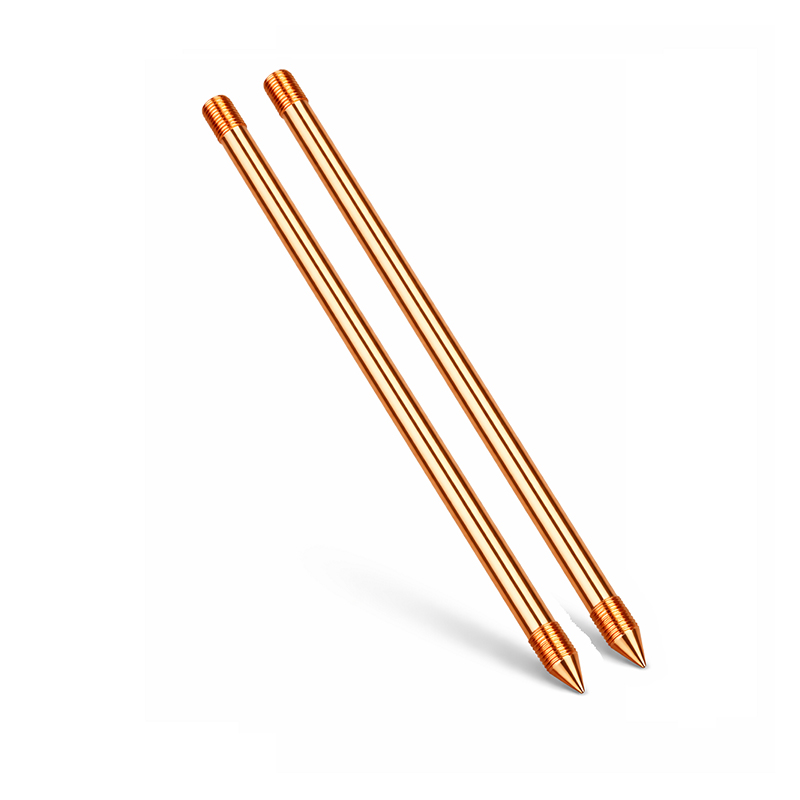 Wholesale Copper-Clad Steel Rod Factory, Manufacturers - Shaoxing Sweld ElectricShaoxing Sweld Electric Co., Ltd. is China wholesale Copper-Clad Steel Rod factory and manufacturers, details:View Product →
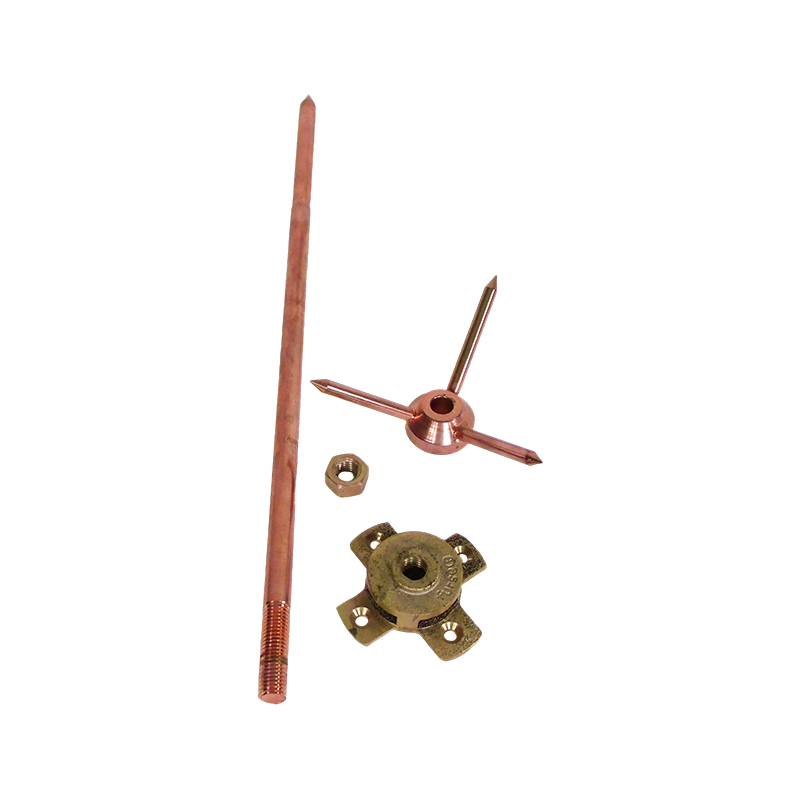 Wholesale Pure Copper Lightning Rod Factory, Manufacturers - Shaoxing Sweld ElecShaoxing Sweld Electric Co., Ltd. is China wholesale Pure Copper Lightning Rod factory and manufacturers, details:I. Product FeaturesA li...View Product →
But a good electrode alone is not enough. The connection between the down conductor and the electrode must be mechanically strong and electrically stable. That is why engineers often use exothermic welding rather than simple mechanical clamps. The molten copper reaction creates a molecular bond that will not loosen or corrode over time. Exothermic welding is especially valuable for remote or buried connections, where a compact powder packet lets a crew form a permanent junction on site.
What the Evidence Says About Lightning Rod Effectiveness
Independent research and field experience both support the conclusion that lightning protection systems work as intended. One widely cited statistic from surge-protection providers is that a structure equipped with a properly designed lightning rod system has a greater than 90% reduction in the probability of being struck compared with an unprotected structure. More importantly, when a strike does occur, the system confines the current to a planned path, preventing fires and reducing damage to internal equipment.
The National Fire Protection Association has maintained lightning protection standards for over a century. These standards are updated regularly based on actual strike data, laboratory testing, and metallurgical research. That long track record is strong evidence that the basic engineering principle—intercept, conduct, and ground—works in practice.
Why Some People Question Whether Lightning Rods Work
Part of the confusion comes from what people expect a rod to do. If a homeowner installs a single rod and does not add down conductors, proper grounding electrodes, and bonding, the rod may do nothing useful. For a practical overview of how air terminals are placed on different buildings, see our guide to lightning rod protection. Worse, a poorly connected system can actually become a hazard, because it gives lightning a partial path that might arc to plumbing or wiring. That is why you often hear stories of “lightning rods that failed” when the real problem was an incomplete system.
Another source of doubt is the misconception that rods protect nearby electronics by absorbing the strike. In fact, the strike current flows through the structure for a few millionths of a second, and without surge protectors, sensitive electronics can still be damaged by induced voltages. Lightning protection reduces direct-strike damage, but it does not replace surge protective devices.
The Critical Role of Grounding and Connections
Even the best air terminal will not save your building if the ground path cannot handle the current. A lightning strike can deliver tens of thousands of amperes in a fraction of a second. The grounding electrode must have low impedance and be in direct contact with soil so the current can spread out rapidly. The resistance of the electrode depends on its material, length, soil moisture, and the quality of its connections.
Many contractors choose copper-clad steel rods because they resist corrosion while providing a low-resistance path. For rocky or high-resistivity soil, multiple rods are often driven deeper or spaced apart, then interconnected with bare copper cable. The joints between the cable and the rods must be made with exothermic welding to avoid the high-resistance oxide films that form on mechanical connections over time. This is why bagged exothermic welding powder is standard gear for every grounding crew.
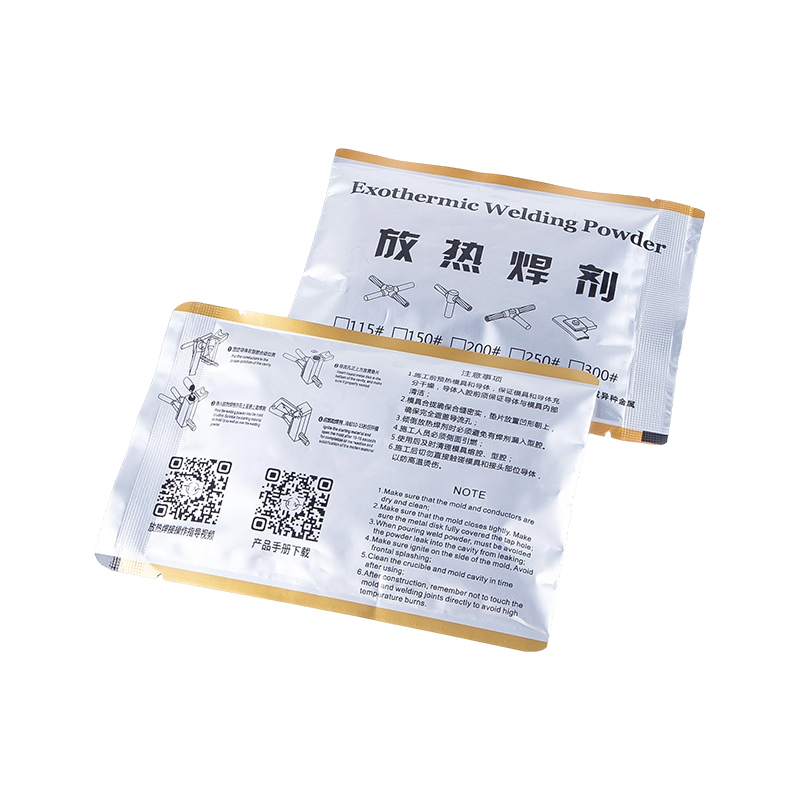 Wholesale Bagled Exothermic Welding Powder Factory, Manufacturers - Shaoxing SweShaoxing Sweld Electric Co., Ltd. is China wholesale Bagled Exothermic Welding Powder factory and manufacturers, details:Product Overview...View Product →
When Are Lightning Rods Worth Installing?
Homes and buildings in areas with frequent thunderstorms, on hilltops, or surrounded by open ground face a higher lightning risk. So do tall structures, water towers, church steeples, and buildings with extensive metal roofs. If you are in a location that already experiences occasional lightning damage, a complete system is a one-time investment that pays off over decades. Many insurance companies also recognize the value of certified lightning protection and may offer reduced premiums.
For industrial buildings, communication towers, and electrical substations, lightning protection is not optional. The same grounding components that protect a house—rods, conductors, electrodes, and welded joints—are also the foundation of substation and tower grounding grids. Choosing the right materials affects both safety and long-term maintenance cost.
Installation and Maintenance Considerations
Lightning protection is not a do-it-yourself project. A professional installer will measure the site, calculate the number of air terminals needed based on building dimensions, choose the correct down conductor route, and verify that the grounding electrode meets local electrical code requirements. After installation, the system should be inspected annually and after major storms. Loose connections, corroded terminals, and damaged conductors are the most common reasons a system becomes ineffective.
For the same reason, every component should be selected with maintenance in mind. Hot-dip galvanized steel components offer a cost-effective option for less corrosive environments; copper and copper-clad materials are preferred where corrosion resistance or lower resistance is critical. When you replace or extend an existing system, matching the conductor material and connection method is essential to prevent galvanic corrosion at the joint.
Assessing Your Risk Level
A simple way to decide whether to install a system is to check your local keraunic level—the number of thunderstorm days per year. Locations with more than 20 to 25 thunderstorm days per year should consider lightning protection, especially for detached homes in exposed areas. Also evaluate the replacement value of electronics and any flammable materials stored in the building. The cost of protection is always much lower than the cost of a lightning fire.
So, do lightning rods really work? Yes, when they are part of a complete, correctly grounded system. A single rod is not a magic shield; but a full air-termination network, with robust down conductors, proper ground electrodes, and welded or certified connections, is one of the most reliable safety measures available for protecting structures from direct lightning strikes. The evidence from decades of standards, laboratory tests, and real-world installations is clear: they work, and they have been working for over a century.
If you are planning a lightning protection system or replacing grounding materials, talk to an engineer who understands both the standard and the site. And when you choose components, remember that the rod is only the visible tip of a much larger system. The hidden grounding network deserves just as much attention. Review the full range of lightning protection and grounding components to build a system that will perform when a storm arrives.
PREV: Stranded vs Solid Wire: Choosing the Right Electrical Conductor for Your Job
NEXT: What Is a Ground Clamp? Earthing Clamps & Fixing Clamps Explained for Safe Grounding
Contact Us
Your email address will not be published. Required field are marked*
Categories
- Company News(1)
- Industry News(19)
News
-
-
“How does a lightning rod work?” is one of those questions that sounds simple u...
Read More -
Introduction: More Than Just a "Metal Rod" on the Roof When you look up at the s...
Read More -
Thunderstorms are one of nature's most dramatic weather events. They can appear...
Read More -
An electrical grounding system works by creating a dedicated, low-impedance pat...
Read More -
Every building, substation and telecom tower quietly depends on metal buried in...
Read More

The company is committed to in-depth research in the field of
grounding and large-scale manufacturing of products. It is a
comprehensive technology enterprise integrating R&D,
manufacturing and technical services. It is a high-quality
supplier for many domestic first-line engineering construction
companies.
- Contact Information
-
- TEL
- +86-575 8930 2616
- +86-130 6788 7328
- Address
- No. 55, Gaoxiang Road, Shengzhou City, Shaoxing City, Zhejiang Province, China
- Grace Wang
- E-mail: [email protected]
- Phone:+86 135 8735 6239
- WhatApp: +86 135 8735 6239
- WeChat: +86 135 8735 6239
- Lucy Xu
- E-mail: [email protected]
- Phone:+86 139 0585 3744
- WhatApp: +86 139 0585 3744
- WeChat: +86 139 0585 3744
- April Zhang
- E-mail: [email protected]
- Phone:+86 139 0585 4994
- WhatApp: +86 139 0585 4994
- WeChat: +86 139 0585 4994

