


 English
 中文简体
Every lightning bolt is the visible end of a chain reaction that begins well be...
Read More

Home · News · Industry News · How Are Lightning Storms Formed? A Clear Guide to the Science and Safety
Industry News
How Are Lightning Storms Formed? A Clear Guide to the Science and Safety
2026-11-20Content
Lightning storms are not a separate kind of weather system; they are thunderstorms that have built up enough electrical charge to produce lightning. So how are lightning storms formed? The short answer is that warm, moist air rises, cools, and condenses into a tall cloud while ice particles collide inside it. Those collisions separate positive and negative charge. When the resulting electric field becomes strong enough, the air breaks down and a lightning channel forms. The full process is a chain of ordinary atmospheric events, which is why the same ingredients can produce a brief afternoon storm or a long-lived severe system.
The Atmospheric Recipe: Moisture, Instability, and Lift
A thunderstorm needs three basic ingredients: moisture, instability, and a lifting mechanism. Moisture comes from humid air near the surface, often transported from a warm ocean, lake, or saturated ground. Instability means that a parcel of warm air, once pushed upward, remains warmer than the surrounding air and keeps rising. Lift can come from a cold front, a sea breeze, a mountain slope, or local heating that makes the air near the ground buoyant.
As the rising air expands and cools, water vapor condenses into cloud droplets. Condensation releases latent heat, which gives the updraft extra energy. If the updraft is strong and deep enough, the cloud grows well above the freezing level. At that height, supercooled water droplets and ice particles coexist, and the stage is set for the electrical processes that make a storm a lightning storm. You can read a broader walk-through in our overview of how thunderstorms form.
Inside the Cloud: Ice, Collisions, and Charge Separation
The key engine of electrification is not simply that a cloud is tall. It is the collision between different types of ice particles in the presence of supercooled water. Graupel, which is a soft, rounded ice particle, collides with lighter ice crystals. During those collisions, charge tends to transfer between the particles. The lighter ice crystals often carry positive charge upward, while heavier graupel carries negative charge downward. This creates a cloud with a positively charged upper region and a negatively charged lower region.
That separation is not perfect or uniform, and real storms are messy. Strong updrafts, turbulence, and varying particle sizes create pockets of charge rather than a simple two-layer battery. But the overall result is an electric field that grows stronger as more collisions occur. The negative lower cloud region also repels electrons in the ground below, leaving the surface with a localized positive charge. The cloud and the earth are now part of a large, stressed electrical system.
From Cloud to Ground: Leaders, Streamers, and the Return Stroke
Most lightning begins as an intracloud discharge, but when a channel develops toward the ground, the visible sequence is easier to follow. A stepped leader starts from the charged cloud region and moves downward in short, jagged jumps. It is not yet a bright return stroke; it is a faint, branching path that ionizes the air ahead of it. As the leader approaches the surface, upward streamers can rise from tall objects, trees, towers, or the ground itself. When one streamer connects with the descending leader, the channel is completed.
The connection triggers a return stroke, a rapid flow of current that heats the narrow channel and produces the bright flash we see. A single flash can contain multiple return strokes as dart leaders follow the same ionized path. This is why lightning often appears to flicker. The process is fast, but it is not random: it follows the path of least electrical resistance as the leader and streamers compete to complete the circuit.
Thunder, Wind, and the Lifecycle of the Storm
Thunder is the sound of the lightning channel heating the surrounding air in a fraction of a second. The air expands rapidly, creating a shock wave that becomes an acoustic rumble as it travels. Thunder does not cause lightning; it is a consequence of the discharge. The same storm that produces lightning also produces strong updrafts, downdrafts, heavy rain, hail, and gusty winds.
An ordinary thunderstorm often passes through developing, mature, and dissipating stages. In the developing stage, the updraft dominates and the cloud grows taller. In the mature stage, rain and downdrafts appear, and lightning is most frequent. In the dissipating stage, the downdraft cuts off the warm moist inflow, and the storm weakens. Wind shear can separate the updraft from the precipitation area, allowing storms to last longer and sometimes become organized into multicell clusters or supercells.
| Stage | What Happens | Why It Matters |
|---|---|---|
| Developing | Warm, moist air rises and condenses into a growing cumulus cloud. | The updraft builds the cloud structure needed for ice collisions and charge separation. |
| Mature | Rain, downdrafts, and lightning become established. | This is usually the most electrically active phase and the most hazardous outdoors. |
| Dissipating | The downdraft weakens the inflow of moist air and the storm fades. | Lightning can still occur near the edges, so the storm is not safe until it has clearly passed. |
What This Means for Grounding and Lightning Protection
The science of storm formation explains why protection is not a single product but a system. A lightning rod, or air terminal, is designed to intercept a descending leader and provide a preferred attachment point. From there, the current must travel through a down conductor and into the earth along a controlled path. The goal is not to stop lightning; it is to reduce the chance of damage by giving the discharge a low-resistance route and by bonding metallic parts so that dangerous voltage differences do not develop.
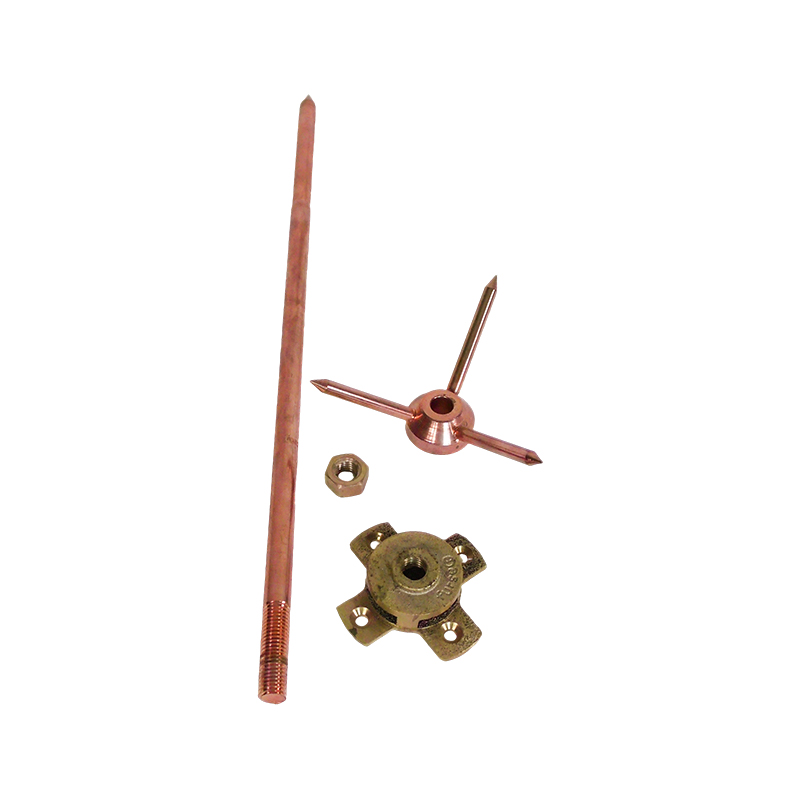 Pure Copper Lightning Rod for Protection SystemsPure copper air terminal with high conductivity and corrosion resistance, offered in listed rod diameters, lengths, and thread sizes.View Product →
Grounding electrodes are the other end of that path. Copper-bonded steel rods combine the mechanical strength of steel with the conductivity and corrosion resistance of a copper outer layer, which is useful in many soil conditions. The conductor, rod, clamp, and connection details must suit the soil, the fault-current duty, and the installation method. A grounding system that looks complete above ground can still underperform if the buried connections are loose or the electrode spacing is poor.
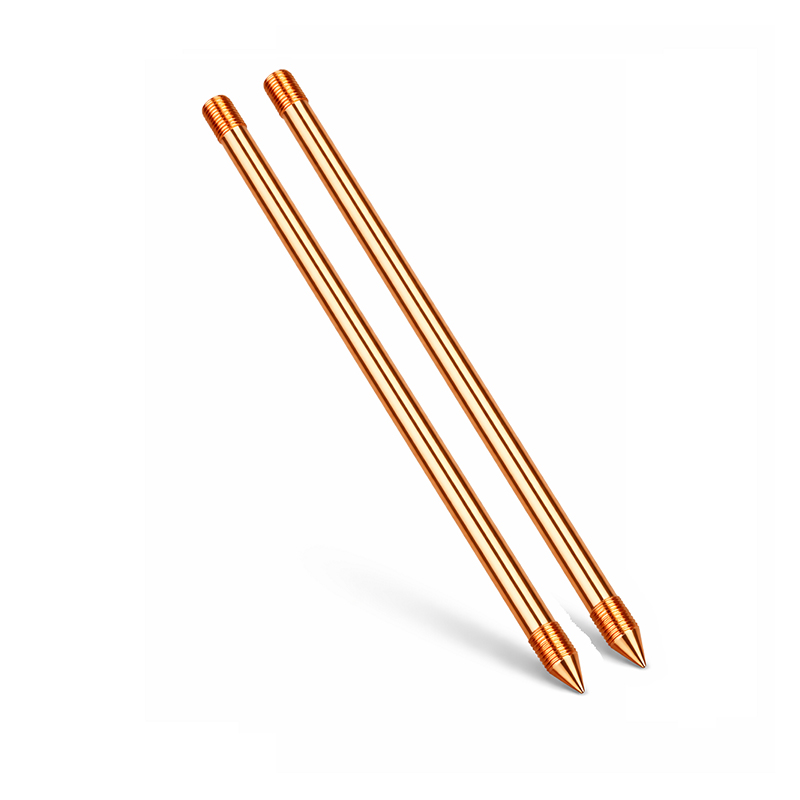 Custom Copper-Clad Steel Grounding RodSteel-core rod with copper cladding combines strength and conductivity; listed diameters, lengths, and joint designs suit grounding grids and lightning paths.View Product →
Connections are often the weakest link because they are small, numerous, and sometimes buried. Exothermic welding is a practical way to make permanent, low-resistance joints between conductors, ground rods, tapes, and structural steel. The process uses a controlled reaction in a graphite mold to fuse the materials, which reduces reliance on mechanical pressure alone. The mold must match the conductor shapes and sizes, and the powder must be used according to the manufacturer’s procedure. Proper training, clean surfaces, and the correct mold closing are just as important as the materials themselves.
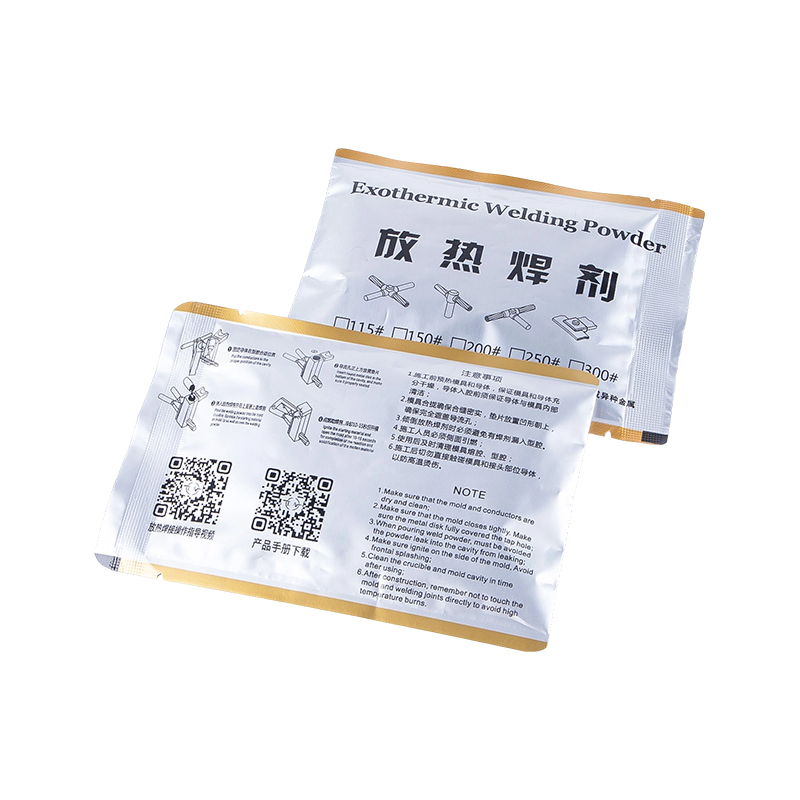 Exothermic Welding Powder for Grounding ConnectionsCopper exothermic welding powders in 98% and 88% grades form permanent, high-conductivity grounding and lightning-protection joints when matched to mold and conductor.View Product →
For anyone specifying a protection system, the most useful habit is to trace the entire lightning current path: air terminal, down conductor, bonding point, grounding electrode, and soil. Each part has a role, and each connection deserves attention. If you are reviewing conductor choices, clamps, or welding accessories for a project, our team can help you compare practical options without treating the selection as a one-size-fits-all exercise.
PREV: How Are Lightning Bolts Formed? Step-by-Step Science of Storm Electricity
NEXT: How Lightning Forms: Charge Separation, Stepped Leaders and Return Strokes
Contact Us
Your email address will not be published. Required field are marked*
Categories
- Company News(1)
- Industry News(29)
News
-
-
Thunderstorms are one of nature's most dramatic weather events. They can appear...
Read More -
Every solar power system faces a real electrical threat from lightning. Whether...
Read More -
Lightning arrives without warning, yet its effects are rarely random. A single ...
Read More -
How does grounding work? Set the jargon aside and it comes down to one simple i...
Read More -
“How does a lightning rod work?” is one of those questions that sounds simple u...
Read More

The company is committed to in-depth research in the field of
grounding and large-scale manufacturing of products. It is a
comprehensive technology enterprise integrating R&D,
manufacturing and technical services. It is a high-quality
supplier for many domestic first-line engineering construction
companies.
- Contact Information
-
- TEL
- +86-575 8930 2616
- +86-130 6788 7328
- Address
- No. 55, Gaoxiang Road, Shengzhou City, Shaoxing City, Zhejiang Province, China
- Grace Wang
- E-mail: [email protected]
- Phone:+86 135 8735 6239
- WhatApp: +86 135 8735 6239
- WeChat: +86 135 8735 6239
- Lucy Xu
- E-mail: [email protected]
- Phone:+86 139 0585 3744
- WhatApp: +86 139 0585 3744
- WeChat: +86 139 0585 3744
- April Zhang
- E-mail: [email protected]
- Phone:+86 139 0585 4994
- WhatApp: +86 139 0585 4994
- WeChat: +86 139 0585 4994

