


 English
 中文简体
Every solar power system faces a real electrical threat from lightning. Whether...
Read More

Home · News · Industry News · How Lightning Is Produced: From Cloud Charge Separation to Ground Strike
Industry News
How Lightning Is Produced: From Cloud Charge Separation to Ground Strike
2026-11-06Content
Lightning is one of the most powerful and visible forces in nature. Every second, roughly 50 to 100 lightning strikes occur somewhere on Earth, and each one carries energy that can heat the surrounding air to temperatures hotter than the surface of the Sun. But what actually creates that flash? Understanding how lightning is produced begins with a look into the towering clouds of a thunderstorm.
For professionals who design and install grounding systems, this understanding is far from academic. The way a storm cloud builds charge and releases it through a stepped leader and return stroke directly affects how air terminals, down conductors, and earth electrodes should be selected and connected.
Charge Separation Inside the Thunderstorm Cloud
Inside a cumulonimbus cloud, strong updrafts carry moisture to freezing altitudes, where water droplets become supercooled and form ice crystals and soft hail known as graupel. As these particles collide and rub against each other in the turbulent airflow, electrons transfer from lighter ice crystals to heavier graupel particles.
Positive at the Top, Negative at the Bottom
The lighter ice crystals, now missing electrons, become positively charged and are swept to the upper cloud regions. The heavier graupel, carrying the extra electrons, becomes negatively charged and settles toward the middle and lower portions of the cloud. Over time, this charge separation builds a powerful electric dipole.
In a fully developed thunderstorm, the potential difference between the cloud and the ground can exceed 100 million volts. When the electric field grows strong enough to overcome the insulating properties of air, the breakdown process begins.
The Stepped Leader and the Return Stroke
The first visible stage of a lightning flash is a process called the stepped leader. This is a narrow channel of ionized air that advances downward from the cloud in discrete jumps of roughly 50 meters at a time, moving at speeds around 200,000 kilometers per hour. As it descends, the stepped leader branches repeatedly, following the most conductive paths available.
How the Ground Connection Is Made
When the stepped leader comes within tens of meters of the ground, the electric field at its tip becomes strong enough to draw upward streamers from tall or conductive objects. When one of those streamers meets the descending leader, the path is complete. A return stroke then surges upward along that channel at up to one-third the speed of light, producing the brilliant flash we see.
The return stroke carries anywhere from 20,000 to more than 100,000 amperes. After the initial stroke, additional dart leaders may repeat along the same channel, which is why a single flash often appears to flicker multiple times.
Common Types of Lightning
Cloud-to-ground lightning is the most familiar, but it represents only a small fraction of all lightning activity. Most discharges occur entirely within the cloud or between clouds. The table below summarizes the main types.
| Type | Discharge Path | Typical Location |
|---|---|---|
| Negative cloud-to-ground | Cloud base to earth | Under the storm core |
| Positive cloud-to-ground | Cloud top to earth | Ahead of the storm, often from the anvil |
| Intra-cloud | Within a single cloud | Inside the thunderstorm cell |
| Cloud-to-cloud | Between adjacent clouds | Between separate storm cells |
| Ground-to-cloud | Upward from a grounded object | Tall towers, buildings, mountain peaks |
Why Positive Lightning Is Especially Dangerous
Positive lightning originates from the upper positive charge region and can strike several kilometers away from the rain core. It tends to have a longer duration and a larger charge transfer, which makes it more likely to start fires or damage electrical infrastructure. A protection system that cannot handle a high-energy return stroke may fail exactly when it is needed most.
Why Lightning Production Matters for Protection
Once we can describe how lightning is produced, the connection to protection design becomes clearer. The stepped leader is attracted to the highest points on the ground, which is why an air terminal is installed on top of a structure. The terminal becomes the preferred attachment point for the upward streamer, giving the lightning current a controlled path to follow instead of allowing it to punch through the structure randomly.
But the air terminal is only the beginning. The current still needs to travel down to the earth interface, where the grounding system must be able to accept a very large pulse without a dangerous rise in ground potential. This is why experienced engineers review the entire path before specifying components. It is worth reviewing how lightning rods function in practice before starting any protection upgrade.
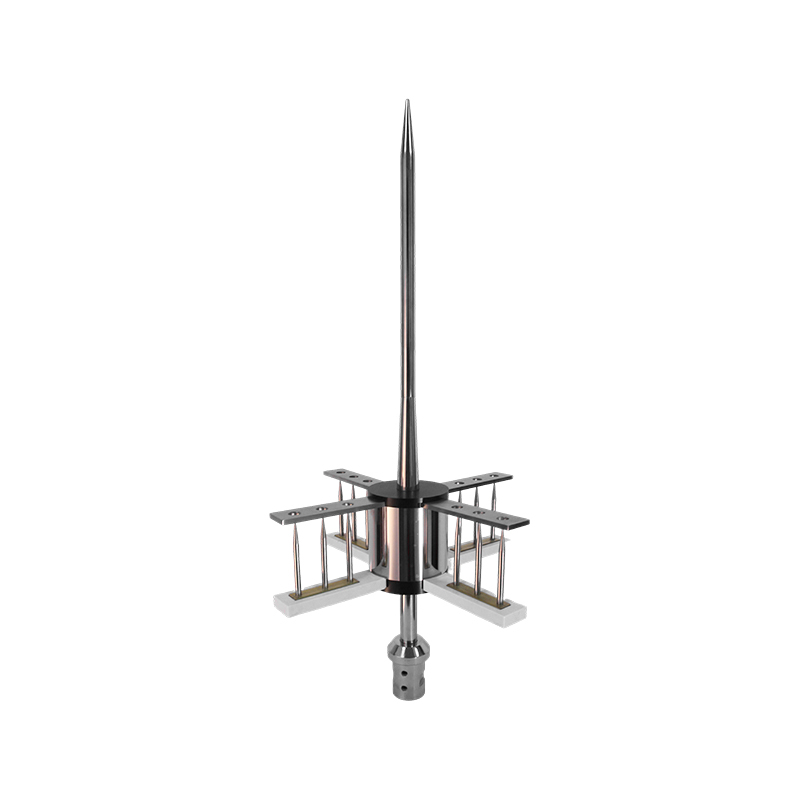 PDC 3.3–6.3 Early Discharge Lightning RodReview the entire lightning path with this active, maintenance-free rod. Its pre-discharge design helps manage high pulse currents safely, making it ideal for a full system upgrade.View Product →
Grounding: The Final Destination for Lightning Current
The return stroke does not end when it reaches the ground. Lightning current spreads outward through the earth electrode system, and the quality of that system decides whether equipment survives, whether step voltages remain safe, and whether secondary arcs occur. A low-impedance connection to earth is essential.
Exothermic welding is widely regarded as the most reliable way to make those connections. Instead of relying on mechanical pressure, a fused molecular bond is formed between copper conductors, copper-clad steel rods, and galvanized steel components. The resulting joint resists corrosion and maintains stable resistance for decades. For electrode material, copper-clad steel offers the conductivity of copper with the mechanical strength of a steel core, making it suitable for driven ground rods in almost any soil condition.
If you are evaluating the underground side of a lightning protection system, our frequently asked questions cover common concerns about electrode spacing, connection methods, and soil resistivity.
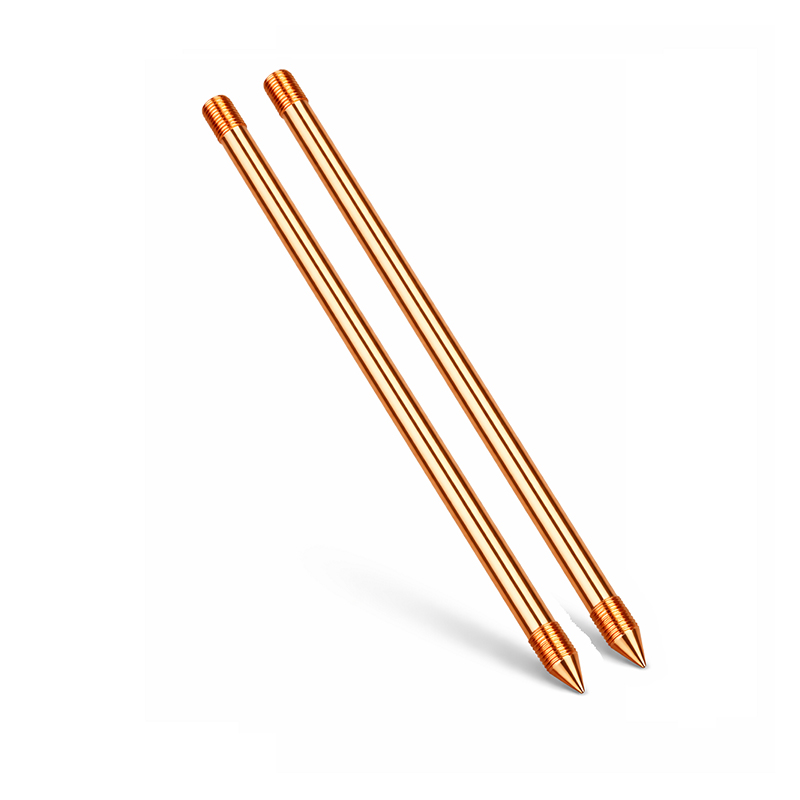 Copper-Clad Steel Rod for Grounding SystemsConsider this corrosion-resistant rod when evaluating underground connections. It supports low-impedance earthing, crucial for controlling step voltages and preventing secondary arcs.View Product →
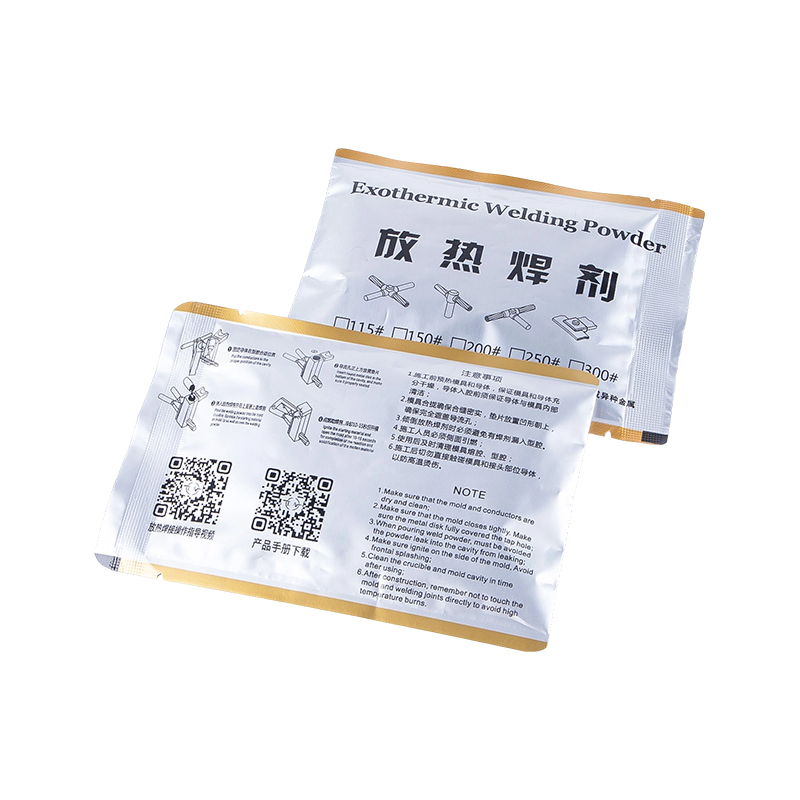 Bagled Exothermic Welding Powder for Reliable JointsThis powder creates permanent, conductive bonds in grounding networks. Its high-temperature reaction ensures durable connections, addressing common concerns about electrode spacing and soil resistivity.View Product →
A Complete Sequence in Summary
The full process of how lightning is produced can be condensed into these steps:
- Ice crystals and graupel collide inside the thunderstorm cloud.
- Charge separates: positive at the top, negative at the bottom.
- The electric field increases until air begins to ionize.
- A stepped leader advances downward in discrete jumps.
- An upward streamer connects with the leader from the ground.
- The return stroke surges upward, creating the visible flash.
- The current dissipates through the grounding electrode system.
Each of those seven stages has practical design implications. The air terminal controls where the streamer attaches. The down conductor controls the path. The welded ground connections control what happens once the energy reaches the earth. Understanding lightning is not merely a physics exercise; it is the foundation of any reliable protection strategy.
PREV: How to Use a Crimp Sleeve: Practical Guide for Secure Cable Connections
NEXT: how much energy is in a lightning bolt: Practical Applications, Selection, Performance
Contact Us
Your email address will not be published. Required field are marked*
Categories
- Company News(1)
- Industry News(29)
News
-
-
Lightning is one of the few natural events you can watch from start to finish a...
Read More -
Electrical contractors rarely arrive on site with a single task. On a grounding...
Read More -
Lightning is one of nature's most spectacular and destructive displays. Over th...
Read More -
Every lightning bolt is the visible end of a chain reaction that begins well be...
Read More -
Every building, substation and telecom tower quietly depends on metal buried in...
Read More

The company is committed to in-depth research in the field of
grounding and large-scale manufacturing of products. It is a
comprehensive technology enterprise integrating R&D,
manufacturing and technical services. It is a high-quality
supplier for many domestic first-line engineering construction
companies.
- Contact Information
-
- TEL
- +86-575 8930 2616
- +86-130 6788 7328
- Address
- No. 55, Gaoxiang Road, Shengzhou City, Shaoxing City, Zhejiang Province, China
- Grace Wang
- E-mail: [email protected]
- Phone:+86 135 8735 6239
- WhatApp: +86 135 8735 6239
- WeChat: +86 135 8735 6239
- Lucy Xu
- E-mail: [email protected]
- Phone:+86 139 0585 3744
- WhatApp: +86 139 0585 3744
- WeChat: +86 139 0585 3744
- April Zhang
- E-mail: [email protected]
- Phone:+86 139 0585 4994
- WhatApp: +86 139 0585 4994
- WeChat: +86 139 0585 4994

