


 English
 中文简体
Lightning arrives without warning, yet its effects are rarely random. A single ...
Read More
Home · News · Industry News · How to Use a Crimp Sleeve: Practical Guide for Secure Cable Connections
Industry News
How to Use a Crimp Sleeve: Practical Guide for Secure Cable Connections
2026-11-06Content
Crimp sleeves, also called ferrule sleeves or compression sleeves, are small metal tubes used to make permanent connections in wire rope and electrical cable. In grounding and earthing work, they offer a fast and dependable way to splice stranded copper conductors, form eye loops for bolted connections, or join a cable to a ground rod. Exothermic welding remains the preferred method for the most critical permanent grounding joints, but a correctly crimped sleeve is a solid alternative when you know how to use it. This guide walks you through the whole process, from choosing the right sleeve to inspecting the finished crimp.
What a Crimp Sleeve Does
A crimp sleeve works by cold-forming metal around the conductors placed inside it. When compressed with the correct die, the sleeve deforms evenly and presses tightly against the wire strands. The finished connection has both mechanical strength and good electrical conductivity. Because no heat is involved, crimping is a safe option in confined spaces or near flammable materials.
Common applications include:
- Forming an eye loop at the end of a ground cable for bolting to a ground rod, busbar, or equipment frame.
- Splicing two lengths of stranded copper conductor together.
- Repairing a damaged section of flexible copper braid or a down conductor.
- Creating a T-tap on a main grounding conductor without cutting the cable.
Choose the Right Crimp Sleeve
Match the Sleeve Material to the Conductor
For electrical grounding, use copper or copper-alloy sleeves on copper, copper-clad steel, and bronze conductors. Aluminum sleeves belong on aluminum cable or wire rope, not on copper. Mixing metals at a connection point invites galvanic corrosion, which is especially damaging in buried or outdoor grounding systems. If the application involves regular inspection, stainless steel sleeves offer extra durability in aggressive soil conditions.
Size the Sleeve Accurately
Getting the sleeve size right is the most important step. A sleeve that is too large will not grip the strands firmly, and one that is too small is almost impossible to fit. The sleeve should slide over the conductor with light resistance, and the strands should fill the bore without visible gaps.
| Conductor Diameter | Sleeve Bore | Sleeve Length | Number of Crimps |
|---|---|---|---|
| 2.0 mm | 2.5 mm | 8 mm | 1–2 |
| 3.2 mm (1/8 in) | 3.5 mm | 12 mm | 2 |
| 4.5 mm (3/16 in) | 5.0 mm | 16 mm | 2 |
| 6.0 mm (1/4 in) | 6.5 mm | 20 mm | 3 |
When in doubt, test the fit before making any cuts. Slide the sleeve over the stripped conductor and confirm that it seats firmly. If the sleeve spins easily around the wire, it is too big.
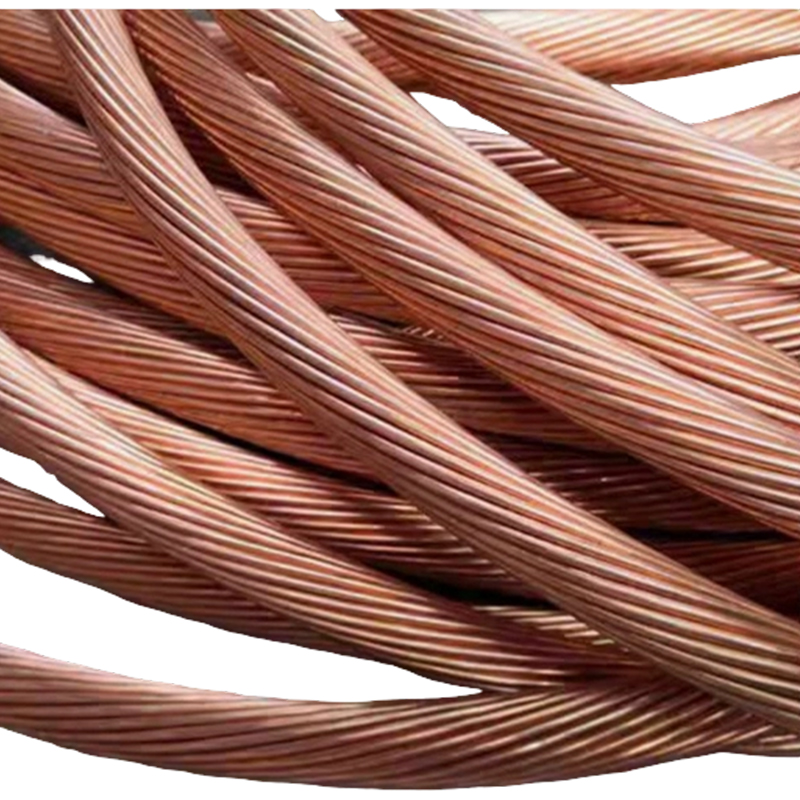 Bare Hard Copper Stranded Wire for Reliable Grounding ConnectionsThis bare copper conductor suits dry environments and high-current applications. The text before it advises checking sleeve fit, while the next paragraph recommends proper crimping tools for consistent results.View Product →
Tools You Need
For most grounding and wire-rope jobs, use a proper crimping tool with matched dies. A pliers-style hand crimper works for small sleeves, but for conductors of 10 mm² and larger, a ratchet-style tool gives much more consistent results. Hydraulic crimpers are worth setting up when you are working with thick ground conductors or making many connections in one session.
Along with the crimper, keep a sharp cable cutter, a wire brush for cleaning the conductor, and heat-shrink tubing or self-bonding tape if the joint needs insulation.
Step-by-Step: How to Use a Crimp Sleeve
Follow these steps for a crimp that will hold under both mechanical load and electrical stress.
- Cut the conductor cleanly with a sharp cable cutter. A ragged cut leaves loose strands that may not enter the sleeve properly.
- Clean the exposed metal with a wire brush. Oxide and grease on the copper increase contact resistance and weaken the joint.
- Slide the sleeve over the conductor. For an eye loop, form the loop first, then pass the sleeve over the tail and the main wire together.
- Position the sleeve so that it covers the full length of the tail. Leave about 2–3 mm of the tail sticking out beyond the end of the sleeve. This small tail is your visual confirmation that the wire has not slipped.
- Place the sleeve in the die and make the first crimp at the end of the sleeve closest to the tail. This pushes the sleeve material toward the tail and holds the wire from the very start.
- Close the tool fully, hold for a moment, and release. Do not stop halfway and re-press the same spot.
- Move to the next crimp position, overlapping the previous crimp by about 1.5 mm so there is no weak gap between indentations.
- Inspect the finished joint. A good crimp is smooth, with no cracks in the sleeve and no stray strands protruding from either end.
- If the wire moves inside the sleeve after crimping, cut the joint off and start over. Never re-crimp a pulled joint in place.
For a clean eye loop, keep the bend radius generous and do not kink the conductor at the sleeve entry. A sharp kink concentrates stress and can cause the cable to break under vibration.
Common Mistakes and How to Avoid Them
Most crimp failures come from a small set of avoidable errors:
- Oversized sleeve. This is the main cause of pull-out failures. The sleeve must fit the conductor closely.
- First crimp in the wrong place. Crimping the middle of the sleeve first leaves the tail end loose. Start at the tail end.
- Too few crimps. A 12 mm sleeve normally needs two crimps; longer sleeves need three. Follow the recommendation printed on the package or in the tool manual.
- Over-crimping. Applying more pressure than the tool is designed for can crack the sleeve wall.
- Wrong die profile. An oval or hexagonal die must match the sleeve size. Using the wrong die creates an uneven crimp.
- Dissimilar metals. Copper and aluminum in direct contact without suitable protection will corrode over time.
Crimp Sleeves, Clamps, or Exothermic Welding?
In grounding systems, you have three practical ways to make a connection. Crimp sleeves sit between mechanical clamps and exothermic welding in both effort and permanence. A crimped joint is stronger than most clamps and does not loosen with temperature cycles, but it is not as corrosion-resistant as a welded bond.
For overhead down conductors, temporary grounding sets, and many air-termination connections, crimped sleeves are perfectly acceptable. For buried joints or connections that will carry significant fault current, exothermic welding is still the standard, because it fuses the conductors into a single molecular bond.
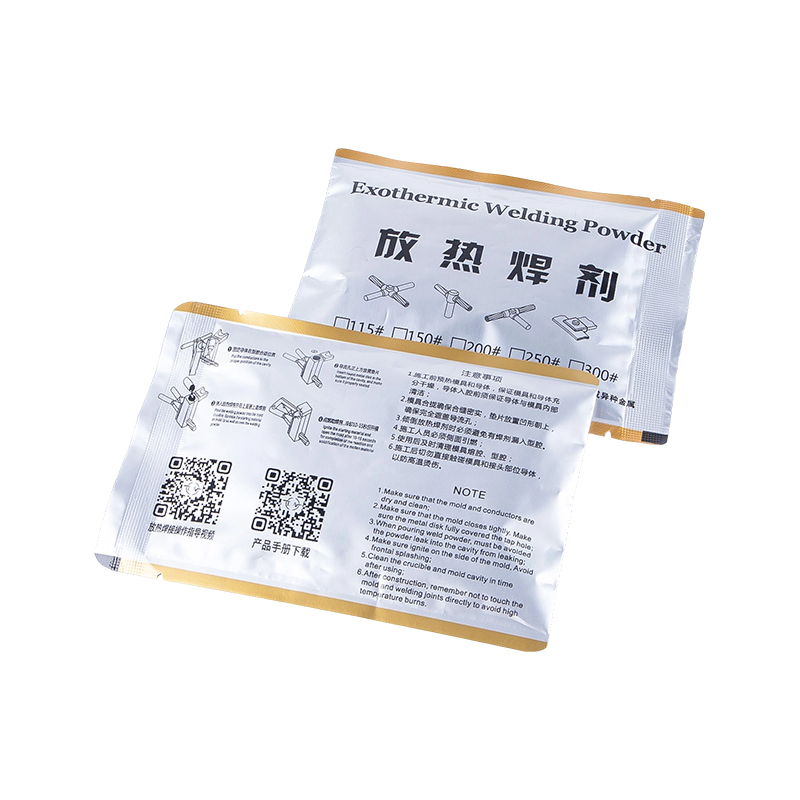 High-Purity Exothermic Welding Powder for Permanent Ground JointsThis welding powder creates a fused molecular bond for buried or fault-current connections. Available in multiple weights and copper purities, it requires no external power and works on various conductor metals.View Product →
Mechanical clamps have their place too, especially when you need a removable connection for testing or maintenance. A well-made ground clamp tightened onto a clean surface is simple and effective, and it allows the conductor to be disconnected later without cutting.
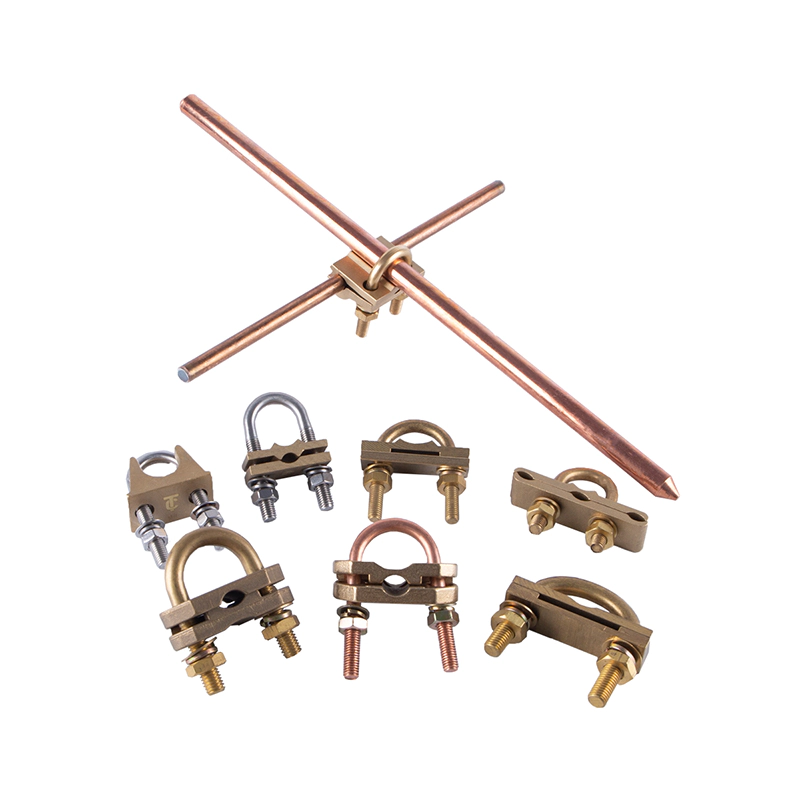 Custom Ground Clamps for Removable and Accessible ConnectionsThese clamps offer simple, effective grounding that can be disconnected later without cutting. Ideal for testing or maintenance, they suit temporary joints where permanent fusion is not needed.View Product →
Before choosing a method, think about what the joint must do over its lifetime. If you need a reliable connection quickly on bare copper stranded wire, a properly crimped sleeve is a professional answer. For help selecting the right conductor type and size, our copper stranded wire selection guide covers the basics.
The fundamentals stay the same regardless of method: clean metal, matched sizes, correct tooling, and careful inspection. Crimp sleeves are a small component, but they carry real responsibility in a grounding system. Used correctly, they give years of trouble-free service. If you are unsure about a specific application, contact our team and we will be glad to help you choose the right material for the job.
PREV: How Electrical Contractors Work: Grounding, Bonding, and Lightning Protection
NEXT: How Lightning Is Produced: From Cloud Charge Separation to Ground Strike
Contact Us
Your email address will not be published. Required field are marked*
Categories
- Company News(1)
- Industry News(29)
News
-
-
Every solar power system faces a real electrical threat from lightning. Whether...
Read More -
How does grounding work? Set the jargon aside and it comes down to one simple i...
Read More -
“How does a lightning rod work?” is one of those questions that sounds simple u...
Read More -
Every building, substation and telecom tower quietly depends on metal buried in...
Read More -
An electrical grounding system works by creating a dedicated, low-impedance pat...
Read More

The company is committed to in-depth research in the field of
grounding and large-scale manufacturing of products. It is a
comprehensive technology enterprise integrating R&D,
manufacturing and technical services. It is a high-quality
supplier for many domestic first-line engineering construction
companies.
- Contact Information
-
- TEL
- +86-575 8930 2616
- +86-130 6788 7328
- Address
- No. 55, Gaoxiang Road, Shengzhou City, Shaoxing City, Zhejiang Province, China
- Grace Wang
- E-mail: [email protected]
- Phone:+86 135 8735 6239
- WhatApp: +86 135 8735 6239
- WeChat: +86 135 8735 6239
- Lucy Xu
- E-mail: [email protected]
- Phone:+86 139 0585 3744
- WhatApp: +86 139 0585 3744
- WeChat: +86 139 0585 3744
- April Zhang
- E-mail: [email protected]
- Phone:+86 139 0585 4994
- WhatApp: +86 139 0585 4994
- WeChat: +86 139 0585 4994

